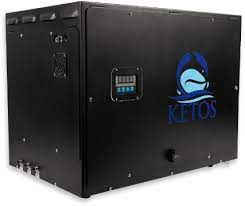
 KETOS SHIELD marries self-calibrating hardware with cloud-enabled software to deliver a solution that allows water operators to monitor for total ammonia nitrogen (and other variables) in real-time, all while lowering the traditional up-front costs associated with testing water parameters.
Introducing KETOS SHIELD, a multi-award-winning intelligent water management solution. Organizations can leverage real-time automated monitoring for total ammonia nitrogen and 30+ other water testing parameters (such as inorganic materials, heavy metals, and other environmental factors). Water operators can connect to their data via an internet-aware modular system that makes decision-making more accessible than ever – on-site, in the office, or on the move.
Why Monitor Water for Total Ammonia Nitrogen with KETOS
Ammonia is naturally occurring in water. It’s produced by organic matter decay and can enter water supplies via human activity, including petrochemical, plastic, and pharmaceutical production, as well as via fertilizers.
When present in water at relatively low concentrations, ammonia poses no threat to humans, however, it can be an irritant to eyes/nose and can affect the taste and odor of water. In drinking water, monitoring for ammonia is essential as it can react with chlorine and decrease disinfection efficiency. For this reason, drinking water should not contain more than 0.2 mg/L.
In wastewater, ammonia needs constant monitoring to prevent effluent from damaging local aquatic ecosystems. It can become toxic to marine life when present in larger quantities (0.5 mg/L and above).
What are the Issues with Total Ammonia Nitrogen in Water?

KETOS offers advanced solutions to monitor total nitrogen in wastewater, ensuring compliance with environmental regulations and promoting sustainable water management practices.
Total Ammonia Nitrogen (TAN) in water refers to the combined concentration of ammonia (NH3) and ammonium ions (NH4+) present in aquatic environments. While ammonia is a natural byproduct of biological processes and nitrogen cycling, elevated levels of TAN in water can lead to various challenges and concerns. Here are key issues associated with Total Ammonia Nitrogen in water:
- Toxicity to Aquatic Life: High concentrations of TAN can be toxic to aquatic organisms, particularly fish and invertebrates. Ammonia is highly toxic to fish, causing gill damage, respiratory distress, and impaired osmoregulation. Ammonium ions can also interfere with physiological processes in aquatic organisms, leading to reduced growth, reproductive impairment, and increased susceptibility to diseases.
- Eutrophication: TAN serves as a nutrient for algae and aquatic plants, contributing to eutrophication when present in excess. Elevated TAN levels can stimulate algal growth and bloom formation in water bodies, leading to oxygen depletion, fish kills, and habitat degradation. Eutrophication can disrupt aquatic ecosystems, reduce water quality, and impair recreational activities and ecosystem services.
- Sources of Contamination: TAN pollution in water can stem from various sources, including agricultural runoff, wastewater discharges, aquaculture operations, and industrial activities. Runoff from agricultural lands treated with nitrogen-based fertilizers can carry excess TAN into surface water bodies, while wastewater effluents containing organic matter can release ammonia during decomposition. Aquaculture facilities may also contribute to TAN pollution through feed inputs and waste discharge.
- Regulatory Compliance: Governments and regulatory agencies establish guidelines and standards for TAN levels in water to protect aquatic ecosystems and designated uses of water bodies. Compliance with these regulations requires industries, municipalities, and other stakeholders to monitor TAN concentrations regularly, implement mitigation measures to minimize TAN inputs, and adhere to TAN-related restrictions and guidelines.
- Treatment Challenges: Removing TAN from water sources can be challenging due to its chemical properties and solubility. Conventional water treatment methods such as coagulation, sedimentation, and filtration may be ineffective for TAN removal. Advanced treatment technologies such as biological denitrification, ion exchange, and membrane filtration may be required to reduce TAN concentrations to acceptable levels.
- Environmental Impact: TAN pollution can have adverse effects on freshwater and marine ecosystems, including altered species composition, reduced biodiversity, and ecosystem imbalances. High TAN levels can lead to shifts in community structure, favoring ammonia-tolerant species over sensitive ones. Managing TAN inputs and controlling nutrient pollution are essential strategies for preventing eutrophication and preserving water quality and ecosystem health.
Causes of Total Ammonia Nitrogen in Water
Total Ammonia Nitrogen (TAN) in water originates from a combination of natural processes and human activities. Natural sources include the decomposition of organic matter such as plants, animal waste, and aquatic organisms, which release ammonia into water as a byproduct. Additionally, atmospheric deposition and runoff from agricultural lands contribute ammonia to water bodies. Human activities like wastewater discharge from sewage treatment plants, industrial effluents, and agricultural runoff containing fertilizers also introduce significant amounts of ammonia into water systems. Excessive levels of TAN can lead to eutrophication, harmful algal blooms, and degraded water quality, posing risks to aquatic life and human health. Therefore, managing sources of TAN through proper wastewater treatment, agricultural practices, and pollution control measures is essential for preserving water quality and ecosystem health.
Acceptable Levels of Total Ammonia Nitrogen in Water by Industry
Total Ammonia Nitrogen (TAN) levels in water are regulated by various industries to mitigate environmental pollution and ensure water quality. Acceptable levels vary depending on the specific industry and the purpose of water use. In aquaculture, for instance, TAN levels typically range from 0.5 to 2.0 mg/L to maintain optimal conditions for aquatic organisms. Similarly, in wastewater treatment plants, permissible TAN concentrations may be higher, ranging from 5 to 20 mg/L, to facilitate effective treatment processes. Conversely, in drinking water treatment, strict standards are enforced, with TAN levels usually kept below 0.02 mg/L to ensure safe consumption. The table below outlines acceptable TAN levels in water by industry, providing a comprehensive reference for regulatory compliance and environmental stewardship.
| Industry |
Acceptable TAN Levels (mg/L) |
| Aquaculture |
0.5 – 2.0 |
| Wastewater Treatment |
5 – 20 |
| Drinking Water Treatment |
Below 0.02 |
How to Easily Monitor Water for Total Ammonia Nitrogen
Monitor for total ammonia nitrogen and 30+ other water testing parameters with KETOS. Instead of measuring total ammonia nitrogen with a meter that only measures a handful of conditions; the KETOS SHIELD is capable of mentoring dozens of water related issues — in real-time.
Monitor total ammonia nitrogen and over 30 other crucial water testing parameters with KETOS. From pH levels to dissolved solids, our platform provides comprehensive insights for effective water quality management. Empower your organization with thorough analysis and proactive measures to safeguard water resources efficiently.
If you need to detect
Total Hardness in drinking water,
sulfates in river water, or
Total Dissolved Solids in the mining industry, KETOS’ automated water monitoring will save time and reduce regulatory issues.