


Check Your PFAS Water Safety Grade by Zip Code
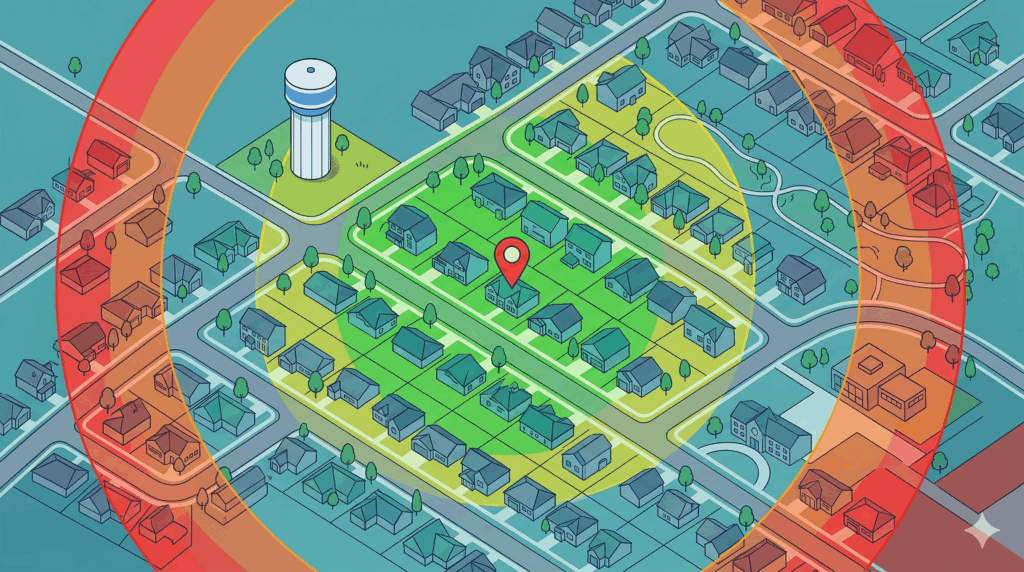
The fastest way to find out whether PFAS contamination is a concern in your area is to check your PFAS Water Safety Grade. The My PFAS Grade tool, powered by KETOS PRISM and built on publicly available EPA data, gives you a letter grade (A, B, or C) for your zip code in about 30 seconds.
Enter your address or zip code, and the tool calculates a risk assessment based on nearby PFAS measurements, contamination sites, and facility data within a 10-mile radius. It also generates a Mapbox-powered contamination map showing what is around you. The results include a clear risk level (Low, Moderate, or High), shareable results you can send to neighbors, and direct links to KETOS KELP if you want to confirm your results with a certified lab test.
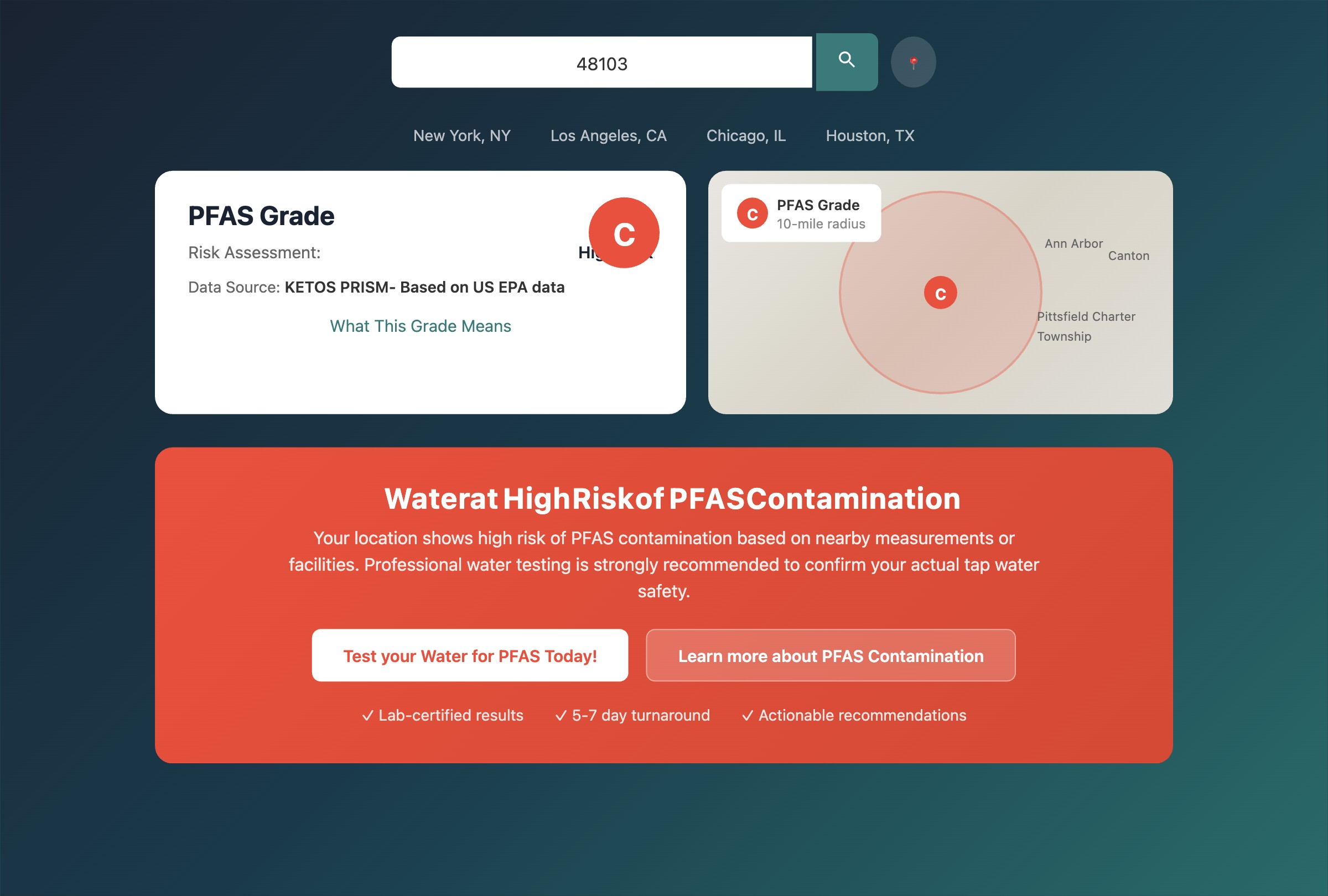
Check your PFAS Grade now — it is free, instant, and does not require an account.
The grade is a screening tool, not a lab result. It tells you whether you should be concerned based on known data in your area. If your grade comes back as B or C, the next step is to test your actual tap water.
What Your PFAS Grade Means
The grading scale uses three levels, A through C:
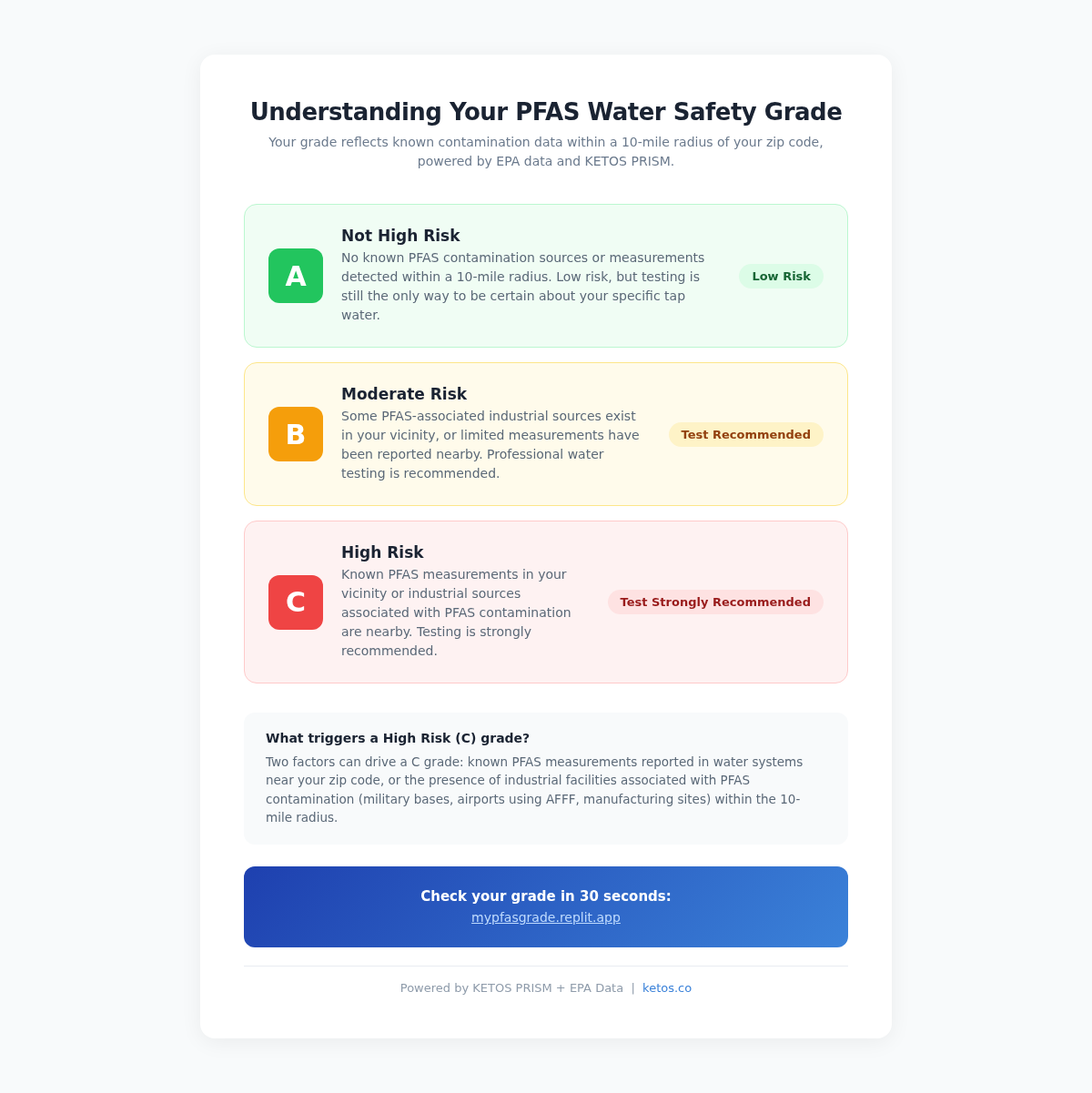
Grade A: Not High Risk. No known PFAS contamination sources or measurements detected within a 10-mile radius. Low risk, but testing is still the only way to be certain about your specific tap water.
Grade B: Moderate Risk. Some PFAS-associated industrial sources exist in your vicinity, or limited measurements have been reported nearby. Professional water testing is recommended.
Grade C: High Risk. Known PFAS measurements in your vicinity or industrial sources associated with PFAS contamination are nearby. Testing is strongly recommended.
Two factors can drive a high-risk grade: known PFAS measurements reported in water systems near your zip code, or the presence of industrial facilities associated with PFAS contamination (military bases, airports using AFFF, manufacturing sites) within the 10-mile radius.
The tool pulls from the same EPA datasets used by federal regulators but presents them in a format that takes seconds to understand rather than hours of database navigation.
Concerned about contaminants in your water?
Get lab-certified water testing from KETOS KELP — results you can trust, backed by real data.
Order a Water Test →Other Free Tools to Cross-Reference Your Results
Your PFAS Grade gives you a quick snapshot. For deeper investigation, several other free databases let you explore the underlying data:
EWG PFAS Contamination Map
The Environmental Working Group (EWG) maintains the most comprehensive public map of PFAS contamination in the United States. As of early 2026, the map tracks contamination data for more than 5,000 locations across all 50 states.
Enter your zip code, city, or state in the search bar. The map displays known contamination sites (industrial facilities, military bases, airports, and landfills where PFAS have been detected), public water systems with reported PFAS detections, and locations where PFAS have been found in groundwater or surface water. Each marker links to detail on which PFAS compounds were detected and at what concentrations.
The EWG map only includes locations where testing has occurred. If no one has tested the water in your area, your zip code will appear clean even if contamination exists.
EPA UCMR 5 Occurrence Data
The EPA’s UCMR 5 occurrence data portal is the most authoritative source for PFAS testing results from public water systems.
Between 2023 and 2025, the EPA required all public water systems serving more than 3,300 people, and a representative sample of smaller systems, to test for 29 PFAS compounds. This is the largest systematic PFAS screening ever conducted in the U.S. Search by water system name, state, or EPA ID to see which compounds were detected and at what concentrations.
UCMR 5 only covers public water systems. Private well owners are not included.
State Environmental Agency Databases
Many states run PFAS monitoring programs that go beyond federal requirements:
Michigan PFAS Action Response Team (MPART) maintains an interactive map of all known contamination sites, cleanup efforts, fish consumption advisories, and drinking water results. Michigan was among the first states to launch a dedicated PFAS response office and has investigated hundreds of sites since 2017.
Maine Department of Environmental Protection tracks PFAS with particular focus on agricultural land where biosolids were applied as fertilizer. Maine has documented some of the most severe agricultural PFAS contamination in the country.
California State Water Resources Control Board maintains a PFAS investigation portal with data on public water systems, groundwater basins, and contaminated sites.
New York State Department of Environmental Conservation tracks contamination sites with focus on former industrial sites and airports in the Hudson Valley and Long Island.
Check your own state’s environmental protection agency website. Even states without dedicated PFAS portals often publish drinking water testing data that includes PFAS results.
DoD PFAS Lookup for Military Communities
If you live near a military base, the Department of Defense PFAS portal provides information on investigation and cleanup activities at specific installations. The DoD has identified over 700 installations where PFAS contamination has been confirmed or is under investigation.
The Air Force Civil Engineer Center publishes a list of Air Force bases where PFAS investigations are underway, including sampling results for on-base and off-base drinking water. The Navy’s PFAS information page provides similar data for naval installations.
Five Location Types That Carry Elevated PFAS Risk
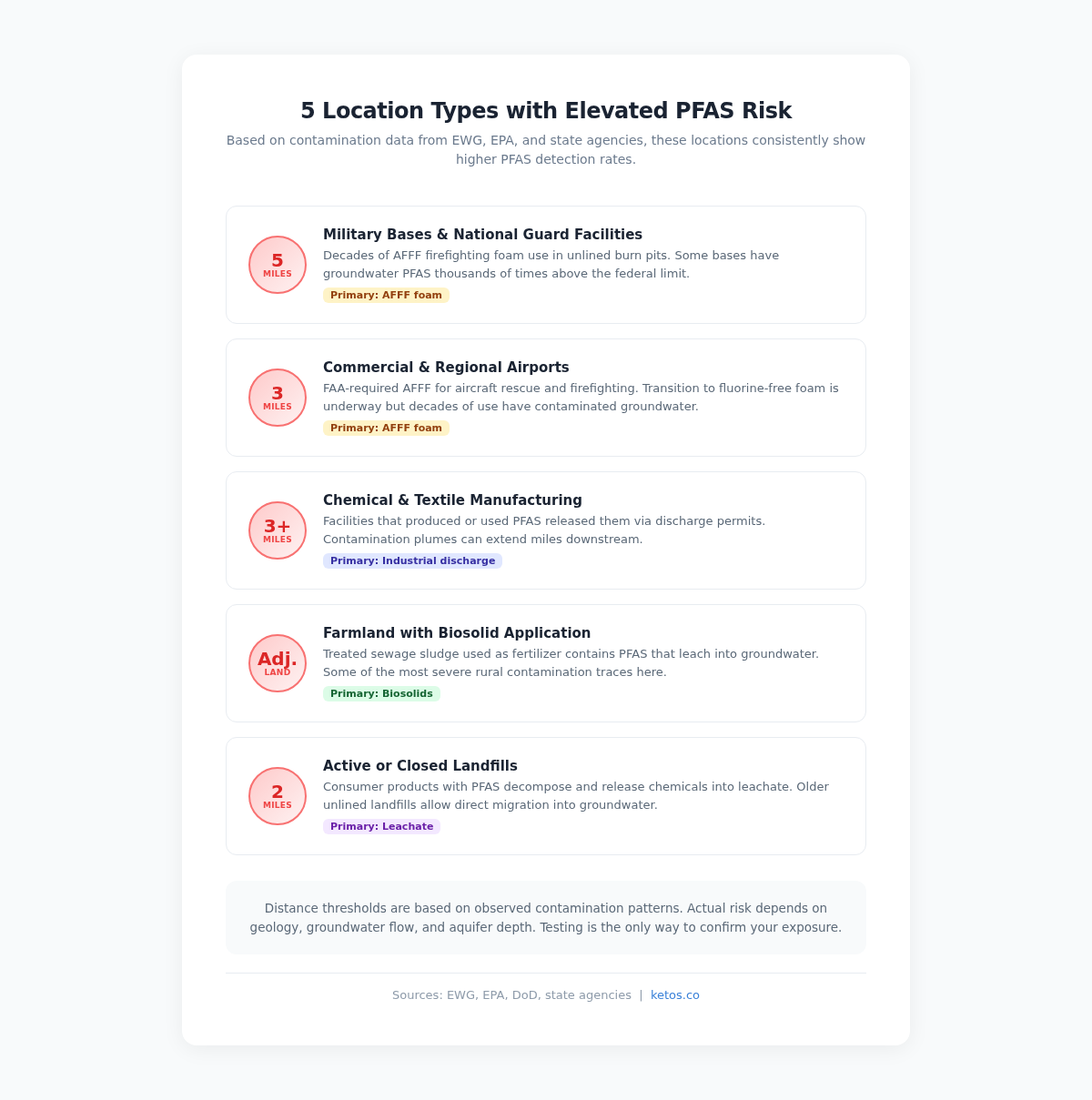
Based on contamination data from the EWG, EPA, and state agencies, these five location types consistently show higher PFAS detection rates:
Within 5 miles of a military base or National Guard facility. Aqueous film-forming foam (AFFF) was used during firefighting training for decades, often in unlined burn pits. The foam soaked into the ground and reached underlying aquifers. Some bases have groundwater PFAS concentrations thousands of times above the federal limit.
Within 3 miles of a commercial or regional airport. The Federal Aviation Administration has required AFFF for aircraft rescue and firefighting operations. A transition to fluorine-free foam is underway following the FAA Reauthorization Act of 2024, but decades of use have already contaminated surrounding groundwater.
Downstream of a chemical or textile manufacturing facility. Facilities that produced or used PFAS compounds released them into surface water through discharge permits. Some contamination plumes extend for miles downstream.
On or near farmland where biosolids were applied. Treated sewage sludge used as fertilizer can contain significant PFAS concentrations. If your property or nearby farms received biosolids, your groundwater may be affected.
Within 2 miles of an active or closed landfill. Consumer products containing PFAS decompose in landfills and release these chemicals into leachate. Older or unlined landfills can allow direct migration into groundwater.
What No Map or Grade Can Tell You
Every tool, including the PFAS Grade, has the same fundamental limitation: it shows where testing has been done and where known sources exist. It cannot measure what is coming out of your faucet right now.
Your water source, your utility’s treatment status, your home’s plumbing, and your proximity to contamination sources all affect your actual exposure. A zip code grade of A does not mean your specific tap is clean. A grade of C does not necessarily mean your tap is contaminated, especially if your utility has already installed treatment.
The grade and the maps tell you what is known. Testing your own water tells you what is true for your tap.
From Grade to Certainty: A Step-by-Step Approach
Step 1: Check your PFAS Grade. Go to mypfasgrade.replit.app and enter your zip code. You will have a risk assessment in 30 seconds.
Step 2: Cross-reference with the EWG map. Use the EWG PFAS map to see specific contamination sites near you.
Step 3: Check your utility. If you are on public water, search the UCMR 5 data for your water system’s results.
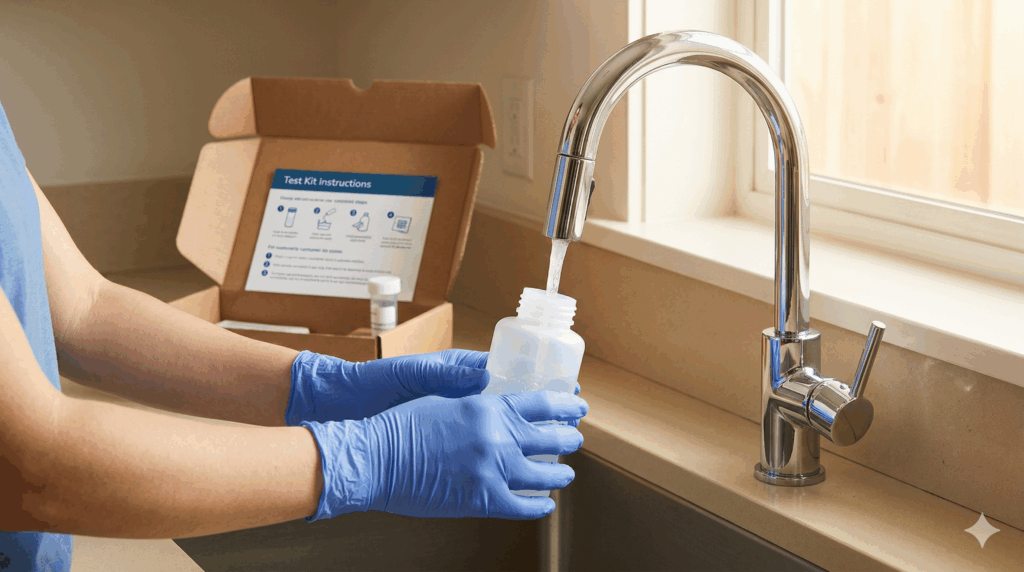
Step 4: Test your tap water. If your grade is B or C, or if you are on a private well regardless of grade, a certified lab test of your actual water is the only way to know your real exposure. Order a PFAS test kit from KETOS KELP.
Step 5: Share your grade. The My PFAS Grade tool generates a shareable link. Send it to neighbors, family, and friends so they can check their own areas.
Your grade is where awareness starts. Testing is where certainty begins.
For the science behind why PFAS are harmful, see what are forever chemicals. For details on what your utility is legally required to do, see PFAS drinking water regulations. For guidance on choosing a test and collecting a proper sample, see how to test your water for PFAS.
References
- KETOS. “My PFAS Grade: PFAS Water Safety Grade Tool.” Powered by KETOS PRISM, based on US EPA data. https://mypfasgrade.replit.app
- Environmental Working Group. “PFAS Contamination Interactive Map.” https://www.ewg.org/interactive-maps/pfas_contamination/
- U.S. Environmental Protection Agency. “UCMR 5 Occurrence Data.” https://www.epa.gov/dwucmr/occurrence-data-unregulated-contaminant-monitoring-rule
- Michigan PFAS Action Response Team (MPART). https://www.michigan.gov/pfasresponse
- Maine Department of Environmental Protection. “PFAS in Maine.” https://www.maine.gov/dep/spills/topics/pfas/
- California State Water Resources Control Board. “PFAS Investigation.” https://www.waterboards.ca.gov/pfas/
- New York State Department of Environmental Conservation. “PFAS Contamination.” https://www.dec.ny.gov/chemical/108831.html
- U.S. Department of Defense. “PFAS: Addressing Per- and Polyfluoroalkyl Substances.” https://www.defense.gov/Spotlights/pfas/
- Air Force Civil Engineer Center. “PFOS/PFOA Information.” https://www.afcec.af.mil/What-We-Do/Environment/PFOS-PFOA/
- Naval Facilities Engineering Systems Command. “PFAS Information.” https://www.navfac.navy.mil/pfas/
- Federal Aviation Administration. “Aircraft Rescue and Firefighting.” https://www.faa.gov/airports/airport_safety/aircraft_rescue_fire_fighting
- U.S. Congress. “FAA Reauthorization Act of 2024.” https://www.congress.gov/bill/118th-congress/house-bill/3935
Test your water for PFAS: KETOS KELP provides EPA-certified lab analysis of 30+ PFAS compounds with fast digital results. View testing packages.