



A cooling tower in the Bronx passed its owner’s Legionella test on August 20 and failed the city’s on September 12, and both results are probably correct. That is the thread running through this week’s stories: a test answers the question it was built to ask, and the trouble starts when the question was the wrong one, or was never asked at all. Ten towers found by one method and awaiting a second, 6,300 water systems that have yet to count their lead pipes, a main in North Carolina that failed while well inside its rated life, a reservoir at a new floor, and a state fund set up specifically to pay for looking. This page is the companion to our newsletter; each section stands alone.
Inside this week’s edition:
- The tower that passed its own test
- The inventory comes first
- One main, 50,000 kettles
- Lake Mead finds a new floor
- $55 million to go looking
- By the numbers
- One good sign: Delaware tests the wells the law skips
The Tower That Passed Its Own Test
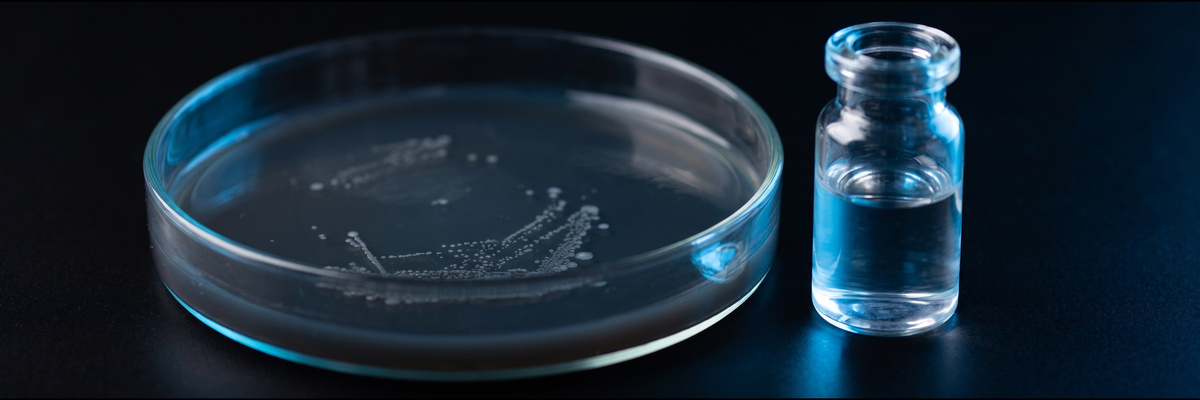
What happened. On September 10 the New York City Health Department announced a cluster of Legionnaires’ disease in Melrose and Morrisania in the South Bronx, ZIP codes 10451 and 10456, with five people diagnosed and one dead. By September 13 the count stood at nine, three of them in hospital. The department sampled every cooling tower in the area, 24 in all, and ten came back positive for Legionella on an initial PCR screen. Owners of the ten were ordered to drain, clean, and disinfect them by September 14. The list, published by the city, includes 1 East 161st Street, which is Yankee Stadium, and 234 East 149th Street, which is Lincoln Hospital.
What each test asked. The Yankees said their cooling towers, installed in 2024, have been tested weekly for three years with results reported to the city monthly, that the most recent test on August 20 was negative, and that the team’s laboratory uses a different method from the one the city ran. The city, for its part, explained what its screen does: PCR detects Legionella DNA, from live and dead cells alike, so a positive says the organism has been in the water without saying when. Confirmatory culture testing, which grows whatever is viable in the sample, takes up to two weeks. Both the team and the health department say no case in the cluster has been linked to the stadium. A weekly negative and a PCR positive three weeks later can both be accurate readings of the same tower, because the bacteria can arrive, multiply, or die between any two samples, and because the two methods ask different questions of the water.
The summer before this one. New York has run this drill once already in 2026. An outbreak on the Upper East Side that began in late June reached more than 90 cases and 11 deaths before the city declared the exposure over on July 31. Investigators sampled more than 180 cooling towers there, and 59 cultured positive for live Legionella; 83 buildings were ordered to clean and disinfect. The city’s cooling tower rules, first written after a 2015 Bronx outbreak, were tightened this year: since May 8, every one of the roughly 5,000 registered systems must be sampled for Legionella at least monthly, with results reported within five days, and a state law signed August 5 added twice-yearly owner certifications, faster response deadlines for certain microbial results, ten-year record retention, and civil penalties up to $12,500 for a violation that results in death or serious injury.
Why cooling towers. A cooling tower is a warm, wet, open machine, and Legionella grows in warm water where scale, sediment, and biofilm give it shelter and the biocide dose lapses. The tower throws off a fine mist as it sheds heat, and people get sick by breathing that mist, and the CDC notes the disease is generally not spread from person to person. Symptoms appear two to fourteen days after exposure, and about one in ten people who develop Legionnaires’ disease die of it, which is why a nine-case cluster brings out the whole apparatus.
The KETOS read. A monthly culture is a verdict on last month. It tells an operator what grew, weeks after the conditions that let it grow came and went. Every cooling tower on this list was, in principle, in compliance the day before its sample was drawn. The conditions themselves are measurable continuously: temperature, pH, conductivity, oxidant residual, ORP, and the scaling index that tells you whether biofilm has somewhere to anchor. A tower whose chemistry is watched in real time shows the drift days before any culture would, and the culture confirms what the chemistry already showed. The Yankees’ clean weekly result and the city’s positive screen were two snapshots taken three weeks apart, and continuous chemistry is what fills the weeks between them.
Sources: NYC Health Department press releases, Sep 10 and Sep 13, 2026; NYC Health Department, Cooling Towers (owner requirements, May 2026 monthly sampling rule); NYC Health Department, “Upper East Side Legionnaires’ Disease Cluster Exposure Has Ended” (Jul 31, 2026); Governor of New York, Chapter 206 signing release (Aug 5, 2026); Associated Press via ABC News (Sep 14, 2026); Gothamist (Sep 13, 2026); CDC, About Legionnaires’ Disease.
The Inventory Comes First

What happened. Every US water system was required to file an inventory of its service lines, lead or otherwise, by October 2024. An Associated Press analysis of EPA enforcement data published September 10 found that roughly 6,300 systems serving 3.8 million people had still filed nothing, and that another 3,500 had filed inventories listing the pipe material as unknown. Nationally, one service line in five has no known material. More than 1,300 systems have been formally cited for missing the deadline, and about three-quarters of the drinking-water enforcement orders EPA has issued since January have been about missing inventories.
The clock. Under the Lead and Copper Rule Improvements, most systems must replace their lead service lines within ten years, and that period begins in 2027. EPA estimates about 4 million homes and businesses are still connected through lead. The cities that have finished, or nearly finished, all started the same way: count the lines, publish the map, replace both sides of the property line at once. The AP’s examples sit at the other end of that process. Dunkirk, New York, with 5,000 customers, is close to two years behind on its inventory. Buffalo reports 45 percent of its service lines are lead, Fredonia 28 percent. Chicago, with about 393,000 lead lines to replace, still lists close to one in ten of its service lines as unknown.
The KETOS read. An inventory is the least glamorous measurement in water and the one every other number depends on. Knowing where the lead is lets a utility target its sampling, rank its replacements, and tell a household with a pregnant resident whether the pipe under the sidewalk matters. The good news inside the AP’s numbers is that the fix for a missing inventory is mostly labor: field verification, records, and a map. The systems that have done it, Pittsburgh and Cincinnati among them, spent years on the counting before the replacement numbers started to move.
Sources: Associated Press, M.K. Wildeman, “The push to remove lead pipes is on. Thousands of water systems still don’t know where theirs are” (Sep 10, 2026); EPA, Lead and Copper Rule Improvements.
Concerned about contaminants in your water?
Get water testing from KETOS KELP using EPA-certified methodology, results you can trust, backed by real data.
Order a Water Test →One Main, 50,000 Kettles
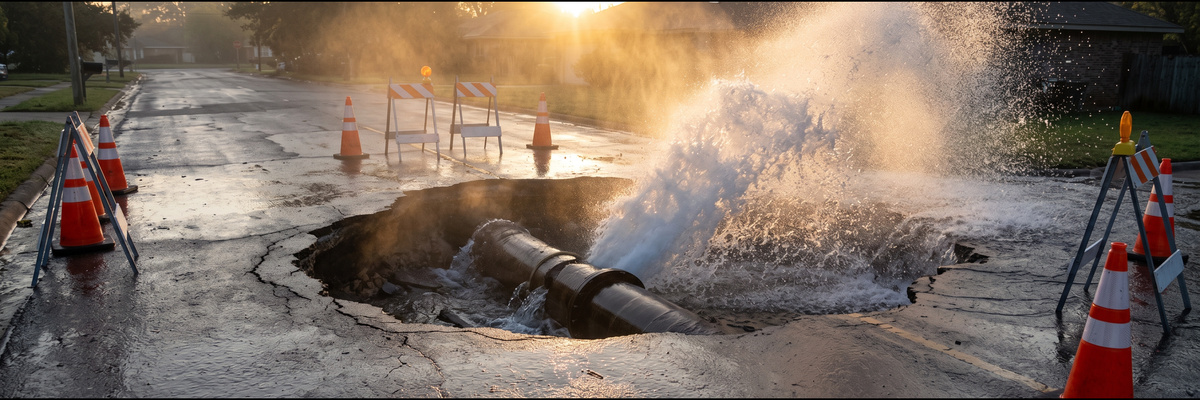
What happened. A 30-inch water main under N.C. 55 in Cary, North Carolina broke in the early hours of Monday, September 14. The town issued a system pressure advisory for about 50,000 customers in Cary and Morrisville, because low pressure can let bacteria into a distribution system even when the water leaving the plant is fine. Part of the highway closed, more than 20 schools dismissed early, and bottled water sold out locally. Crews repaired the main the same day, and by early Tuesday all 14 bacteriological samples collected across the affected area had come back absent of bacteria. The advisory was lifted and customers were told to resume normal use.
The pipe was inside its lifespan. The iron main is more than 30 years old, which the utility says is well within its expected service life, and as of Tuesday no official cause had been determined. Utilities Director Jamie Revels pointed to the neighborhood instead: the break sits in a growing part of town where the network configuration around the main has changed, and that is where the investigation will look once the repair is complete. Council members’ feedback was mostly about communication, with daycares and restaurants reporting they learned of the advisory secondhand.
The KETOS read. Pipe age is the number everyone reaches for after a break, and it is rarely the whole story. Pressure transients, changed flow paths from new connections, and the surge from a valve closing too fast will find the weak joint in a pipe with decades of life left. Fourteen clean samples ended Cary’s advisory, and those fourteen samples were also the town’s entire view of its water during the outage. Continuous pressure and chlorine residual readings across a pressure zone tell an operator, during the event, whether backflow conditions actually occurred and where, which is the difference between a precautionary advisory for 50,000 people and a targeted one.
Sources: WRAL, “Cary water main break impacts 50,000 customers” (Sep 14, 2026) and “Cary leaders address criticism over communication during water main break” (Sep 15, 2026); Town of Cary system pressure advisory.
Lake Mead Finds a New Floor
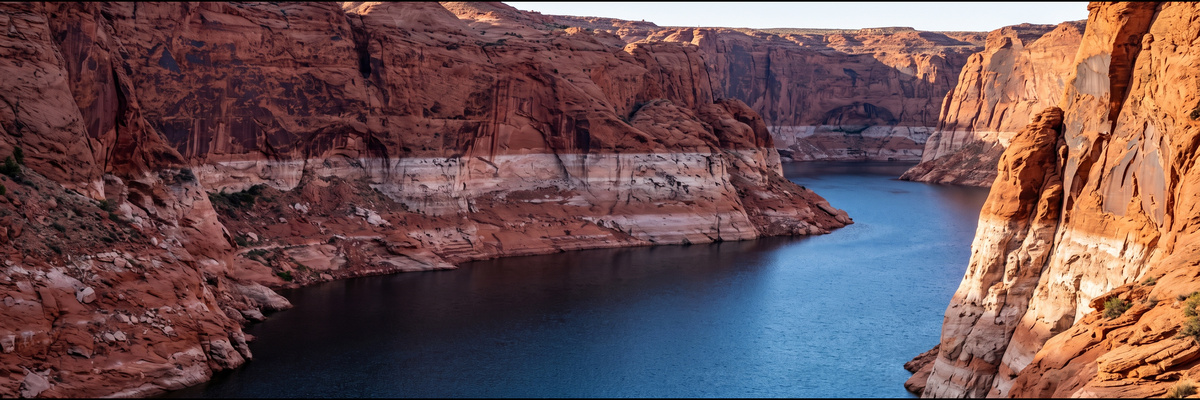
What happened. Lake Mead, the country’s largest reservoir, dropped to 1,038.82 feet on September 1, its lowest reading since the lake first filled in the 1930s, and kept falling; by mid-September the gauge read about 1,038.7 feet, roughly 26 percent of capacity. Lake Powell upstream stood at 3,522.78 feet, within three feet of the record low it set in April 2023. The cause is simple and slow: a winter of record-low snowpack, warm temperatures that kept what snow fell from accumulating, and a summer that NOAA now rates the warmest in 132 years of US records.
The agreement. On September 2 the United States and Mexico signed Minute 334 to the 1944 water treaty, covering 2027 and 2028. Mexico will take 250,000 acre-feet less from the Colorado in each of those years, one sixth of its 1.5 million acre-foot treaty allotment. Mexico may keep storing water in Lake Mead, up to 1.5 million acre-feet through the end of 2028, but loses access to it if the lake sits below 1,025 feet on January 1, and further reductions are on the table if the reservoir is projected to fall under 1,000 feet. The minute also funds a salinity pilot for water crossing the border and $5.6 million for environmental restoration in the delta.
The KETOS read. Low reservoirs change water quality, usually a season after they change the headlines. As Mead drops, the water drawn from it warms, concentrates dissolved solids, and carries a higher share of salts, which is why Minute 334 pairs a volume cut with a salinity pilot. Utilities downstream of a shrinking reservoir tend to see the change in their treatment chemistry before they see it in a headline, and the ones that trend conductivity and temperature at the intake know how much of the problem is the river and how much is the plant.
Sources: Bureau of Reclamation Lower Colorado gauge data as reported by ABC News and Axios (Sep 2026); IBWC, “United States and Mexico announce Colorado River cooperative agreement” (Sep 2, 2026); The Colorado Sun (Sep 9, 2026); Circle of Blue, Federal Water Tap (Sep 14, 2026); NOAA NCEI, summer 2026 US climate report.
$55 Million to Go Looking
What happened. On September 10 North Carolina’s Attorney General and Department of Environmental Quality announced a $590 million settlement with Chemours and DuPont over PFAS pollution from the Fayetteville Works plant on the Cape Fear River, the largest environmental damages recovery in the state’s history. Of that, $455 million is guaranteed and paid over ten to fifteen years: $380 million to the eleven local governments that had sued, from Bladen and Cumberland counties upstream to Brunswick, New Hanover, and Wrightsville Beach at the coast, and $75 million to the state. The remaining $135 million is a reserve, funded by DuPont and its spinoff Corteva, that the state can draw on if Chemours ever fails to meet its obligations under the 2019 consent order, including supplying clean water to households whose wells it contaminated.
The line item that matters. Roughly $55 million of the state’s $75 million goes to the Emerging Contaminant Mitigation Fund, created by the legislature this year, which in DEQ’s words “supports efforts by local governments to detect and reduce contaminants in drinking water.” Most settlement money in this field pays for treatment at utilities that already know they have a problem, and this fund is aimed at the systems that have yet to look. Six separate cases the state is pursuing against manufacturers of PFAS-containing firefighting foam continue.
The KETOS read. Detection money is rare and it is the right kind of rare. The 2019 consent order forced Chemours to spend close to $1.2 billion stopping discharges, and the households it now supplies with clean water are the ones that were found. A fund earmarked for local governments to detect contaminants is a bet that the map of PFAS in the Cape Fear basin is still incomplete, which every monitoring dataset published so far suggests it is. The systems that spend it on a real baseline will be the ones that can prove, in ten years, that the money worked.
Sources: North Carolina DEQ, “Attorney General Jackson, DEQ Secretary Wilson announce nearly $600M deal with DuPont/Chemours” (Sep 10, 2026); WFDD and WHQR coverage (Sep 10, 2026).
By the Numbers
- 10 of 24: South Bronx cooling towers that screened positive for Legionella by PCR
- 59 of 180+: cooling towers that cultured positive for live Legionella in the summer’s Upper East Side outbreak
- 5,000: cooling tower systems registered in New York City, on a monthly sampling schedule since May 8
- 6,300: water systems, serving 3.8 million people, with no lead service line inventory on file
- 1 in 5: service lines nationwide with material listed as unknown
- 14: bacteriological samples that cleared Cary’s 50,000-customer advisory
- 1,038.7 feet: Lake Mead in mid-September, about 26 percent full and a record low
- 250,000 acre-feet: Mexico’s annual reduction under Minute 334, one sixth of its treaty share
- 74.4°F: average temperature of the contiguous US this summer, the warmest in 132 years; August alone averaged 75.6°F
- $55 million: North Carolina’s new fund for local governments to detect and reduce contaminants
One Good Sign: Delaware Tests the Wells the Law Skips

The Safe Drinking Water Act regulates public water systems, and a private well belongs to whoever owns the house above it, along with whatever is in it. On September 14 Delaware’s Department of Natural Resources and Environmental Control and Department of Health and Social Services opened a statewide program that will test any resident’s private well at no charge for PFAS, nitrate, nitrite, E. coli, total coliform, fluoride, iron, sodium, chloride, sulfate, hardness, alkalinity, and pH. A resident fills in an online consent form, hears from a sampler within two weeks, and if anything exceeds a threshold gets a call within 24 to 48 hours with next steps. Where PFAS turns up, the state may install a filter and maintain it for a year at no cost, with full coverage for low-income households and half for moderate-income ones. The program carries out a priority in Delaware’s 2026 PFAS implementation plan, and it is one of very few in the country that brings a sampling crew to a private well for free.
Sources: State of Delaware, “Free Private Well Water Testing Available for Delawareans” (Sep 14, 2026); WaterWorld (Sep 2026).
KETOS builds continuous water-quality monitoring for utilities and industry. If a story here touched a problem you own, we would like to hear how you see it: reply to the newsletter, or find us at ketos.co.