

It is a practical, day-to-day issue that affects households, businesses, and communities that rely on safe drinking water.
As more people begin to understand how closely water quality is tied to health, property value, and business continuity, interest in monitoring water quality has grown significantly. It is now viewed as an essential part of responsible management, similar to regular financial audits or safety inspections.
In this guide, we will explore what monitoring water quality for safer drinking water really means in simple terms, why it matters so much for public health, what is actually measured, and how different people, from utilities to homeowners, can take action.
What Is Monitoring Water Quality for Safer Drinking Water?
Monitoring water quality for safer drinking water is the ongoing process of checking what is in your water and how those contents change over time. It involves measuring certain physical, chemical, and biological characteristics to understand whether water is safe for drinking and other uses.
Instead of treating it as a one-time test, smart organizations and individuals view monitoring water quality as a continuous cycle of testing, interpreting results, and responding to what the data reveals.
This process usually starts with a basic question: Is the water meeting the standards or guidelines that are meant to protect health and comfort? If the answer is yes, monitoring water quality continues to confirm that conditions remain stable. If the answer is no, it becomes a tool for identifying the source of the problem and whether the actions taken to fix it are working.
In this way, monitoring water quality to ensure safer drinking water is like a health checkup for your water system.
From the perspective of a city water utility, monitoring water quality helps manage risk and maintain public trust. For a business, such as a hotel or food manufacturer, monitoring water quality also protects brand reputation and reduces legal and financial exposure. For a homeowner, it is about ensuring that the water coming from the tap is safe for your family, especially infants, older people, and anyone with a weakened immune system.
Why Does Monitoring Water Quality for Safer Drinking Water Matter For Public Health?
The link between monitoring water quality for safer drinking Water and public health is direct and strong. Many of the most serious water-related health problems are caused by invisible contaminants that often have no obvious taste or smell. Without regular testing, these threats can go unnoticed for months or even years.
Microorganisms such as bacteria, viruses, and protozoa can cause short-term illnesses like diarrhea, stomach cramps, and vomiting. These are often grouped under the term waterborne diseases. When communities fail to monitor water quality, outbreaks of these diseases can spread quickly through neighborhoods or entire towns.
Chemical contaminants create a different kind of risk. Substances like lead, arsenic, nitrates, and certain industrial chemicals can get into water from natural sources, old pipes, fertilizers, or nearby activities. Long term exposure, even at low levels, may contribute to serious health problems such as developmental issues in children, damage to the nervous system, or some cancers. Monitoring water quality helps reveal these patterns before they become long-term crises.
There is also an important mental health and trust component. When people believe their water is unsafe, even if the actual risk is low, it can cause stress, worry, and conflict between communities and institutions. Transparent and responsible monitoring of water quality practices builds confidence and enables people to make informed decisions based on facts rather than rumors or fear.
What Are The Main Parameters Measured In Monitoring Water Quality for Safer Drinking Water?
When professionals talk about monitoring water quality for safer drinking water, they are not looking at just one number. They are measuring a group of parameters that, together, give a picture of safety and performance. These parameters fall into four general categories: microbiological, chemical, physical, and operational.
1. Microbiological Parameters
Microbiological parameters focus on the living organisms in water. Common tests look for bacteria such as E. coli and other coliforms, as well as signs of viruses and protozoa. These tests are often used as indicators of contamination from human or animal waste.
If such indicators are present, it is usually a signal that the water may carry disease-causing organisms and that further investigation and treatment are needed. From a water-quality monitoring standpoint, microbiological testing is often given the highest priority.
2. Chemical Parameters
Chemical parameters cover a wide range of substances. Some examples are:
- Nitrates and nitrites, which often come from fertilizers or septic systems
- Heavy metals like lead, arsenic, and mercury, which can come from natural deposits or old pipes and fixtures
- Organic chemicals, including some solvents, fuel components, or pesticide residues
- Disinfection byproducts, which form when disinfectants like chlorine react with natural organic matter in water
These parameters are critical for long-term monitoring of water quality because many chemical risks are associated with cumulative exposure.
3. Physical Parameters
Physical parameters are related to how water looks, smells, and feels. These include turbidity (how cloudy the water is), color, and odor. Although these do not always indicate direct health risks, they are very useful as early warning signs.
For example, a sudden increase in turbidity can mean that the treatment process is not working properly or that new contamination has entered the source. Monitoring water quality at this level helps operators recognize and correct problems quickly.
4. Operational Parameters
Operational parameters help operators manage treatment and distribution systems. These include:
- pH, which affects corrosion, disinfection, and taste
- Electrical conductivity, which reflects the total number of charged particles in water
- Total dissolved solids, which indicate how much mineral or other material is dissolved in the water
- Residual disinfectant, such as chlorine, shows whether there is enough disinfectant in the system to control microbes without causing unpleasant taste or odor
By tracking these operational factors, staff can adjust their processes in real time and keep monitoring water quality within the desired range.
How Is Water Quality Monitored From Source To Tap?
Monitoring water quality for safer drinking water is not a single checkpoint. It is a sequence of checks from the original water source to the tap where people drink or use the water. Understanding this chain helps explain why problems sometimes appear at the tap even when the treatment plant is functioning correctly.
At the source, which might be a river, lake, reservoir, or groundwater well, the focus is on understanding natural conditions and human influences in the surrounding area. Regular testing here helps identify long-term trends and sudden changes. For example, heavy rainfall can wash soil, fertilizers, and other materials into rivers and lakes, affecting turbidity and nutrient levels. If a factory or farm operates nearby, source monitoring can help detect any impact on the water supply. Monitoring water quality at the source level is the first line of defense.
At the treatment plant, water passes through several steps, such as screening, coagulation, settling, filtration, and disinfection. At each key step, staff test the water to see if the process is working as planned. They check how well particles are being removed, whether pH is in the right range, and whether the disinfectant is doing its job without causing new problems. Water quality monitoring here focuses on process control and safety.
In the distribution system, treated water moves through miles of pipes, tanks, and pumps before reaching users. Conditions in those pipes can affect water quality. For example, if water sits too long in certain sections, disinfectant levels can drop, leading to increased bacterial growth. Old or corroded pipes may release metals into the water. That is why utilities set up sampling points across the system and regularly test for key parameters, such as chlorine, bacterial indicators, and metals. Monitoring water quality in the distribution system helps confirm that the water people receive is as safe as when it left the plant.
In large buildings such as hospitals, universities, hotels, and office complexes, there is also a building-level dimension. Complex plumbing can create warm, slow-moving sections where bacteria like Legionella can multiply. Facility managers may perform their own monitoring of water quality activities, including testing for specific bacteria and managing water temperature and flushing routines to reduce risk.
What Methods and Tools Are Used to Monitor Water Quality for Safer Drinking Water?
There is no single method for monitoring water quality to ensure safer drinking water. Instead, a combination of tools and techniques is used, each with its own strengths. The most common approach is a mix of laboratory and field testing, along with continuous sensor-based monitoring.
1. Laboratory Testing
Laboratory testing remains the backbone of most monitoring water quality programs. In this approach, trained staff collect water samples using clean or sterile containers, label them carefully, and transport them under controlled conditions to a laboratory.
At the lab, professionals use established methods and equipment to measure a wide range of parameters. Lab tests are often required for regulatory compliance and are known for their accuracy and sensitivity. They can detect very low levels of contaminants that field kits might miss.
2. Field Testing
Field testing provides quicker, more flexible information at the sampling site. This includes:
- Test strips that change color in response to certain chemicals, like chlorine or nitrate
- Color comparison kits where a reagent is added to water and matched against a color chart
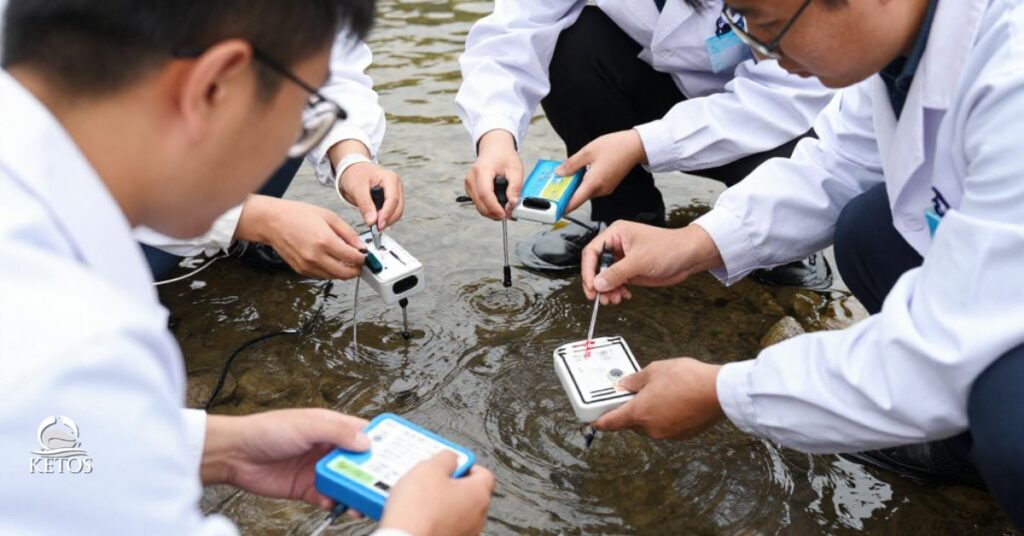
- Handheld meters that measure pH, conductivity, dissolved oxygen, or turbidity
These field tools are especially valuable for daily checks and quick decisions. For example, operators might use a handheld meter to adjust chemical doses in real time. While field tests are not as precise as lab tests, they are an important part of monitoring water quality in practice.
3. Continuous and Online Monitoring
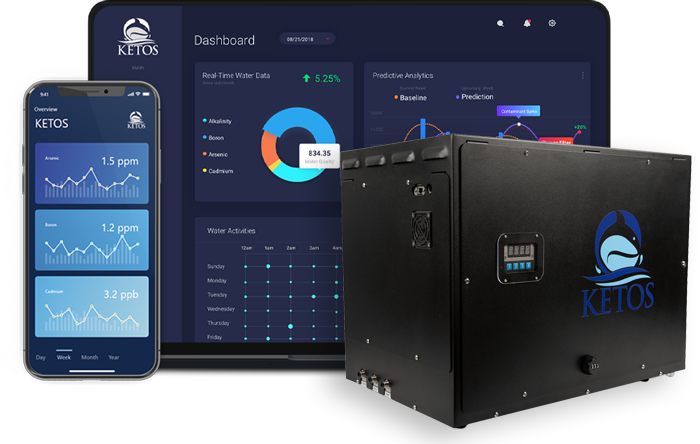
Continuous, online monitoring uses sensors installed in pipelines, tanks, or source water bodies. These sensors measure parameters such as pH, turbidity, chlorine, and conductivity continuously. The data is sent to a control room or remote dashboard where operators can view graphs, set alarms, and track trends over time.
Continuous monitoring of water quality is particularly useful for catching short-term changes that might be missed by occasional sampling. For example, a sudden drop in chlorine or a spike in turbidity can trigger an alert so staff can respond before customers are affected.
Newer technologies are also beginning to play a role in monitoring water quality for safer drinking water. For example, some systems use smart devices connected through communication networks, allowing operators to check conditions from a phone or computer even when they are off-site.
Software tools can help analyze large datasets, identify patterns, and predict outcomes under specific scenarios. Remote sensing and satellite observations can help monitor large lakes and reservoirs to detect algal blooms or sediment buildup.
How Do You Create A Water Quality Monitoring Plan for Safer Drinking Water?
Creating a good monitoring water quality for safer drinking water plan is about being clear, organized, and realistic.
The goals of a plan might include:
- Meeting legal and regulatory requirements
- Protecting public health by detecting problems early
- Improving the performance and efficiency of a treatment plant
- Providing clear information to customers or stakeholders
Once the goals are understood, you can decide which parameters to test, where to test them, and how often.
The next step is to choose parameters based on known or potential risks. For example:
- A rural community near farms may focus on bacteria, nitrates, and pesticides
- An older city may give extra attention to lead and other metals from plumbing
- A reservoir that often has algae might require regular tests related to nutrients and algal toxins
By matching parameters to local conditions, monitoring water quality becomes more targeted and effective.
Then you must decide on sampling locations and frequency. In a typical system, this might include:
- Source water locations such as intakes or wells
- Treatment plant entry and exit points
- Storage tanks and reservoirs
- Critical points in the distribution system, such as dead ends, low-pressure zones, or areas with past issues
Sampling frequency can range from daily to weekly, quarterly, or annually, depending on the parameter and risk level. Microbial indicators and basic operational parameters are usually checked more often, while some chemical tests may be done less frequently.
Finally, a water quality monitoring plan should include clear procedures. These cover how to collect samples, handle and store them, calibrate field instruments, and record and review data.
A good plan also sets out who is responsible for each task and how often the plan itself will be reviewed and updated. When monitoring water quality is guided by such a structured plan, results are more consistent and useful for decision-making.
What Are Best Practices For Sampling Water In Monitoring Water Quality for Safer Drinking Water?
Sampling is one of the most important parts of monitoring water quality for safer drinking water, because errors at this stage can affect everything that comes after. Good sampling practices are not complicated, but they require discipline and attention to detail.
Some core best practices include:
- Using the right container for the test, such as sterile bottles for microbiological tests or special treated containers for metals
- Avoiding contamination by not touching the inside of bottles or caps and by rinsing equipment between sites if it is reused
- Flushing taps for a set period before sampling, unless the goal is to test standing water, such as when checking indoor plumbing
- Labeling each sample clearly with time, date, location, and any relevant notes
Once a sample is collected, the way it is handled matters. Many samples should be kept cool to prevent changes in their contents. Some chemical tests require that samples be preserved with certain additives at the time of collection. Microbiological samples usually need to reach the lab quickly, often within the same day, to be valid.
Field staff should also observe and note any unusual conditions. For example, if the water is unusually cloudy, has a strong smell, or if there has been a recent storm or spill nearby, that information helps later when interpreting the results.
In this way, proper sampling is not just a mechanical step. It is a thoughtful part of monitoring water quality that supports accurate and meaningful conclusions.
How Should You Interpret Water Quality Test Results When Monitoring Water Quality for Safer Drinking Water?
Interpreting results is where Monitoring Water Quality for Safer Drinking Water turns into real action. A lab report might seem full of numbers and abbreviations, but with a basic approach, it can be very understandable.
First, identify each parameter and its unit. Common units are milligrams per liter and micrograms per liter. These are very different scales, so it is important not to mix them up. Also, look at the method detection limit. If a result is listed below this limit, it means the substance may be present at very low levels, but not at a level the test can reliably measure.
Next, compare each result to the guideline or regulatory values. These may come from national drinking water standards or local rules. Some parameters have a maximum allowed value. Others may have a suggested range. Results within these ranges are generally considered acceptable, while those above them usually warrant further investigation or action.
It is also useful to look at trends over time, not just a single result. For example:
- Is turbidity generally low but with occasional spikes?
- Are nitrate levels slowly rising year after year?
- Does pH stay stable, or does it swing widely?
By tracking patterns, you can see whether a system is stable or if conditions are changing. This makes monitoring water quality much more informative.
Finally, when a result exceeds a guideline or is clearly out of pattern, there should be a clear process for responding. Short-term actions may include issuing advisories, increasing treatment, or using alternative sources. Longer-term actions might involve identifying and correcting the root cause, upgrading infrastructure, or revising land-use practices in the area.
How Often Should Drinking Water Be Tested In Monitoring Water Quality for Safer Drinking Water?
There is no single answer that fits every situation, but there are common principles that help guide how often water quality monitoring for safer drinking water should be conducted.
For large municipal systems, testing is usually frequent. Basic operational parameters, such as pH, turbidity, and disinfectant levels, may be continuously measured at treatment plants. Microbiological tests might be done daily or several times per week at various points in the system. Chemical parameters may be tested on schedules ranging from weekly to once or twice a year, depending on the substance and the applicable rules.
For smaller systems and private wells, guidance often suggests at least annual testing for bacteria and nitrates. Some recommend testing for metals like lead or arsenic every few years, especially if the area is known to be at risk. Additional tests may be advised if there are nearby farms, septic systems, or industrial activities.
Testing frequency should also increase after certain events, such as:
- Heavy storms or floods that might wash contaminants into sources
- Earthquakes or construction that could damage pipes
- Changes in taste, smell, or color that are noticed by users
- Work on wells or plumbing that might introduce new materials or disturb deposits
Over time, data from water-quality monitoring can help refine these schedules. If results are consistently good and stable, some tests may be spaced out. If new risks appear or conditions change, testing may need to be more frequent.
Conclusion
Monitoring water quality for safer drinking water is not a one-time project but an ongoing responsibility that touches public health, business continuity, and everyday peace of mind. When water is tested regularly from source to tap, problems are more likely to be found early, before they turn into health crises or costly infrastructure failures. Consistent monitoring also builds a record that helps utilities, businesses, and homeowners understand how their water systems behave over time, under both normal and stressed conditions.
For communities, strong monitoring programs protect vulnerable groups, support trust in local institutions, and provide a factual basis for tough decisions during emergencies. For organizations, they signal professionalism, good governance, and long-term thinking. For individual households, staying informed and taking simple steps to test and treat water when needed can make a real difference in day-to-day safety.
In practical terms, monitoring water quality for safer drinking water comes down to three core actions: know your risks, test regularly with the right methods, and act promptly on the results. If each of these pieces is in place, water systems become more resilient, and the people who depend on them gain an extra layer of protection and confidence.
To take the next step, contact KETOS to learn how our water quality monitoring solutions can help you strengthen your monitoring program, reduce risk, and set your organization up for long term success.
FAQs
How often should I test my drinking water at home?
If you use a private well, testing at least once a year for bacteria and nitrates is a good starting point, and more often if you live near farms, septic systems, or industry. If you are on city water, review your utility’s annual water quality report and test at home when you notice changes in taste, color, or odor.
What are the most important parameters to check when monitoring water quality?
For basic safety, focus on microbiological indicators such as coliform bacteria and on chemicals such as nitrates and, where relevant, lead and arsenic. It is also helpful to track pH, hardness, and residual chlorine to understand how your water behaves in pipes and with treatment devices.
Can clear, good-tasting water still be unsafe to drink?
Yes, some of the most harmful contaminants, such as lead, arsenic, and certain microbes, have no obvious taste, smell, or color. That is why monitoring water quality through regular testing is more reliable than judging water by appearance alone.
Do home test kits replace professional lab testing?
Home test kits are useful for quick checks and for spotting changes, especially for pH, hardness, or chlorine. However, they are less precise and cannot fully replace professional laboratory testing for health-critical parameters such as bacteria, nitrates, and heavy metals.
What should I do if my water test shows a problem?
Start by confirming the result with a follow-up test, preferably from a certified lab, to rule out sampling or handling errors. If the issue is confirmed, contact your local health department or water professional for guidance, and consider temporary measures like bottled water or certified filters while a long-term fix is planned.