



Somewhere in the third-trimester list, between the car seat and the pediatrician paperwork, sits a question most parents answer by guessing: is the tap ready for this baby? It is a five-step checklist, not a mystery, and the whole thing settles in under two weeks. An infant drinks more water per pound of body weight than anyone else in the house, which is reason enough to swap the guess for numbers.
The Checklist
- 1. Pull the public records. Your utility’s Consumer Confidence Report covers the supply, and a zip-code PFAS check covers the neighborhood. Ten minutes, both free, and they frame what to look for at your own tap.
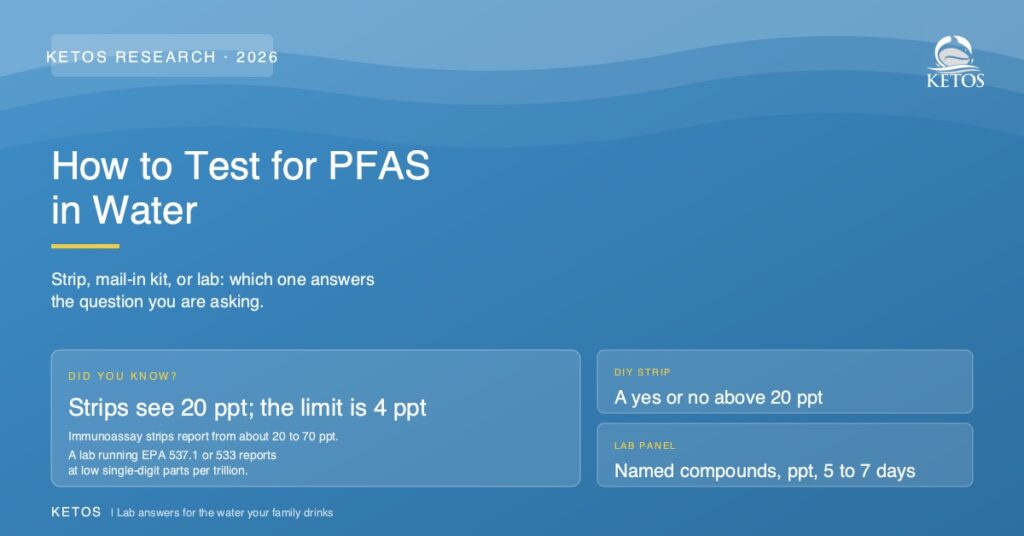
- 2. Test the tap you will actually use. The three numbers that decide the formula-water question, lead, fluoride, and nitrate, plus the headline PFAS compounds, come back from one sample: KELP’s Basic PFAS Screen ($280) reports all of them in 5 to 7 business days.
- 3. On a well? Nitrate goes first. Bottle-fed infants under six months are the population most at risk from nitrate above the 10 mg/L federal standard, and nobody monitors a private well but its owner. Until the number is in hand, use bottled water for formula.
- 4. Decide the formula water with the results. Our formula water guide maps each result to CDC guidance: when tap is fine, when low-fluoride bottled makes sense, and the one case, a lead exceedance, where bottled becomes the rule.
- 5. Retest when the plumbing changes. Renovations, a new water heater, or a change in the water’s taste or color reset the clock, and an annual check keeps the baseline honest through the bottle years.
Concerned about contaminants in your water?
Get water testing from KETOS KELP using EPA-certified methodology, results you can trust, backed by real data.
Order a Water Test →Frequently Asked Questions
When should we test our water before the baby arrives?
Any time in the last trimester works: results arrive in about a week, which leaves room to act on anything they surface. Well households should test earlier if the water will be used for formula, since the nitrate answer determines the plan from day one.
What should new parents test their water for?
Lead, fluoride, and nitrate are the three numbers that drive the formula-water decision under CDC guidance, and the headline PFAS compounds round out the picture. A single tap sample covers all of them through a lab panel.
Do we need to buy special water for the nursery?
Usually not. Nursery water is ordinary low-fluoride bottled water, useful in one specific scenario, and homes with tested, low-lead, moderately fluoridated tap water can mix formula from the cold tap per CDC guidance. The test is what converts “usually” into your answer.
Sources: CDC infant formula preparation and community water fluoridation guidance; EPA lead action level and nitrate standard. Checked August 20, 2026.