


Updated November 2026
The Central Valley Nitrate Control Program is a California rule that cuts nitrate in groundwater and gives safe drinking water to people whose wells are high in nitrate. It is part of CV-SALTS, the Central Valley salt and nitrate program. Permitted dischargers in priority groundwater basins must choose how they will comply. These include growers, dairies, food processors, wineries and wastewater plants. Management zones must offer free well testing and replacement water to residents whose wells exceed the drinking water limit of 10 mg/L nitrate as nitrogen. The Central Valley Regional Water Quality Control Board adopted the program as a Basin Plan amendment in May 2018.
Who has to comply?
Permittees with Central Valley Water Board permits in a priority basin who receive a Notice to Comply. They include:
- Growers (irrigated agriculture)
- Dairies and other bovine operations, and poultry
- Food processors and wineries
- Wastewater treatment plants, industries and recycled water permittees
- Oil and gas operations
Permittees who do not choose a pathway by the deadline in their notice face enforcement by the Board.
Which basins are Priority 1 and Priority 2?
| Priority | Groundwater basins | Notices to Comply |
|---|---|---|
| Priority 1 | Chowchilla, Kaweah, Kings, Modesto, Tule, Turlock | Mailed in 2020 |
| Priority 2 | Delta-Mendota, Eastern San Joaquin, Kern County (Poso), Kern County (West-side South), Madera, Merced, Tulare Lake, Yolo | Mailed December 2023, with 14 months to choose a pathway |
Areas served by a municipal water system are not part of the residential well testing program.
Concerned about contaminants in your water?
Get water testing from KETOS KELP using EPA-certified methodology, results you can trust, backed by real data.
Order a Water Test →Pathway A or Pathway B: which should a permittee choose?
- Pathway A, individual permitting: the permittee carries all compliance costs and duties alone, starting with a Notice of Intent and an initial nitrate assessment. CV-SALTS calls it “difficult and expensive” if nearby drinking water wells are high in nitrate, or if the discharge itself is high in nitrate. The same applies if shallow groundwater exceeds 75% of the drinking water standard.
- Pathway B, management zone: permittees share costs and duties through a local management zone. 93% of Priority 1 permittees chose Pathway B.
What do management zones have to do?
Counted from the Notice to Comply:
- Within 270 days: a preliminary management zone proposal and an Early Action Plan.
- Within 60 days of submitting the Early Action Plan: start carrying it out, unless the Board finds it incomplete.
- 180 days after Board review of the preliminary proposal: a final management zone proposal.
- 180 days after Board review of the final proposal: a Management Zone Implementation Plan, approved after public comment and a hearing.
Along the way, zones reach out to residents, test domestic wells, and give interim drinking water at no cost to residents whose wells exceed the standard. That water comes as bottled water delivery, filling stations or point-of-use treatment. Zones also plan long-term drinking water solutions.
How can I get my well tested for nitrate for free?
Start with the CV-SALTS Find Your Management Zone map. If your home is in a zone, contact it:
- Valley Water Collaborative
- Chowchilla Management Zone
- Kings Water Alliance
- Kaweah Water Foundation
- Kern Water Collaborative
- Tule Basin Management Zone
To check more than nitrate, or if your home is outside a zone, the KETOS KELP Real Estate Well Water test costs $195 plus shipping. It covers nitrate and nitrite, arsenic and other heavy metals, fluoride, sulfate, chloride, hardness and dissolved solids. You fill the bottles at your tap and mail them back with the prepaid label, and the report arrives 5 to 7 business days after the lab receives them.
What nitrate level is safe in well water?
- The limit: 10 mg/L nitrate as nitrogen, the federal drinking water standard. Some labs report nitrate as nitrate instead, and on that scale the same limit is about 45 mg/L. Check which unit your report uses.
- Who is most at risk: infants under six months. EPA warns they can become seriously ill from water above the limit, with shortness of breath and blue baby syndrome.
- Nitrite: limited separately, at 1 mg/L as nitrogen.
What changed in 2026?
- June 3, 2026: the Central Valley Water Board approved the Modesto Management Zone’s implementation plan, Order R5-2026-0032, by a 6-0 vote. It sets a 35-year timeline for dischargers.
- September 2026: the State Water Board sent the 2013 Central Valley dairy general order back to the regional board for revision, with new nitrogen and groundwater requirements to follow.
Where KETOS fits
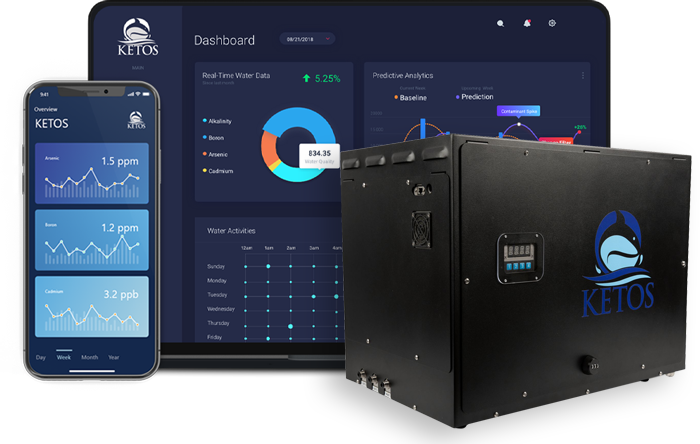
KETOS SHIELD measures nitrate, nitrite, ammonia and orthophosphate on site about hourly, alongside pH and conductivity about every minute, within ±10% of certified lab results. A California Central Valley vineyard uses SHIELD’s real-time nitrate and boron data to blend water from several sources and avoid over-fertilizing. A Fortune 500 meat processor caught nitrate spikes 10 to 20 times above normal that periodic sampling would have missed. See water quality monitoring for agriculture.
Common questions
What is the Central Valley Nitrate Control Program?
It is a California program, adopted by the Central Valley Water Board in 2018 as part of CV-SALTS, that requires permitted dischargers in priority basins to reduce nitrate in groundwater and to make sure residents with high-nitrate wells have safe drinking water.
Is 10 mg/L nitrate the same as 45 mg/L?
Yes. 10 mg/L nitrate measured as nitrogen equals about 45 mg/L measured as nitrate. Both describe the drinking water limit; check which unit your lab report uses.
Who gets free replacement water?
Residents whose domestic well in a management zone exceeds 10 mg/L nitrate as nitrogen. Zones provide bottled water delivery, filling stations or point-of-use treatment at no cost.
Sources: CV-SALTS Nitrate Control Program; CV-SALTS, for permittees; CV-SALTS management zones; EPA National Primary Drinking Water Regulations; Sacramento Valley Water Quality Coalition, June 2026.