



This week starts in Georgia, where KETOS SHIELD has logged more than 122,000 water quality readings across Fulton County’s distribution system. From there, most of the stories turn on the question our cooling tower issue asked last month: what was the test actually built to see? A county with continuous data on its water, a parasite chlorine was never designed to stop, a Legionnaires’ rate near its record, a toxin boiling can’t touch, a well that sat idle for two weeks, and a state that wants the water numbers before it signs another permit. This page is the companion to our newsletter; each section stands alone.
Inside this week’s edition:
- Fulton County goes continuous
- The pool did everything right
- Legionnaires’ keeps climbing
- Boiling won’t fix this one
- Two clean days in Jackson
- Texas wants the water numbers first
- Test kits built for data centers
- By the numbers
- One good sign: a creek comes off the Superfund list
Fulton County Goes Continuous
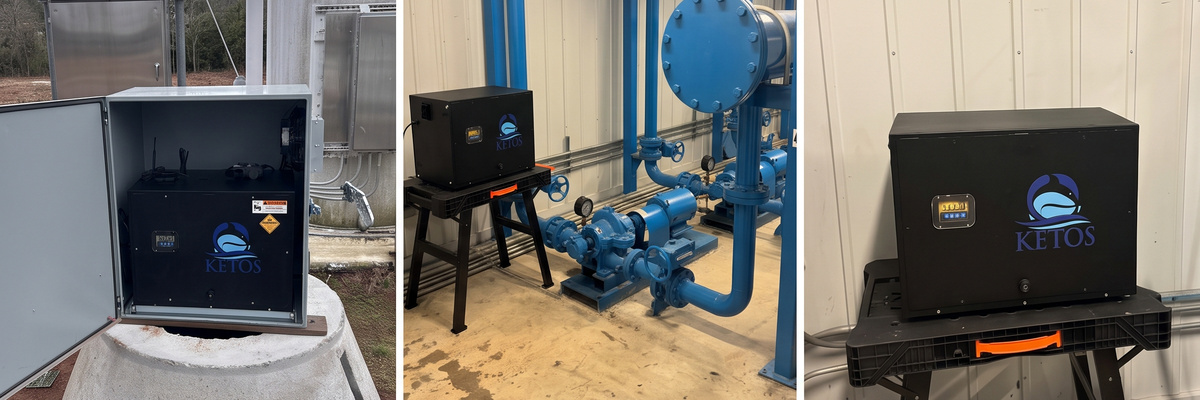
Fulton County, Georgia, one of the fastest-growing water service territories in Metro Atlanta, has deployed KETOS SHIELD autonomous water quality monitoring across its drinking water distribution system. Since installation, the platform has logged more than 122,000 continuous water quality readings across free chlorine, pH, hardness, and other key parameters, giving the utility real-time visibility into system performance that periodic manual sampling could not provide.
Fulton County and KETOS are now running a joint comparative study with the Georgia Environmental Protection Division to evaluate continuous monitoring data for formal regulatory compliance reporting, a step that could set a new benchmark for how Georgia utilities manage drinking water quality. The engagement reflects a broader shift toward continuous, data-driven water infrastructure management across the Southeast.
The Pool Did Everything Right
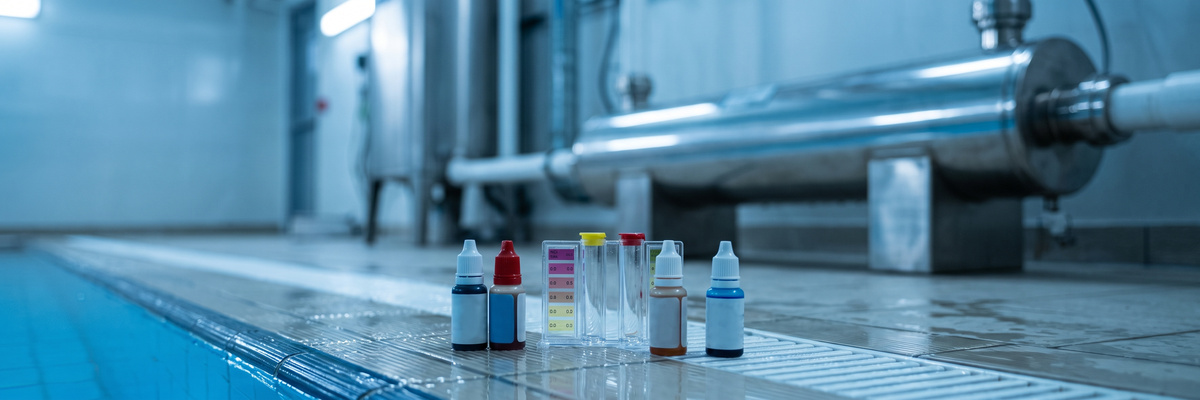
What happened. Public Health Seattle-King County investigated an outbreak of cryptosporidiosis tied to the pool at McMenamins Anderson School in Bothell. Fourteen people who swam there on August 29 or 30 reported nausea, diarrhea, abdominal cramps, or fever, with illness starting between September 3 and 5. Five were tested and four were diagnosed with Cryptosporidium. Nobody was hospitalized and nobody died, and the county says the outbreak appears to be over.
What the investigators found. The county determined that the pool is well maintained and that the facility follows King County’s health and safety requirements. The likely route was a swimmer who was already infected. Cryptosporidium is very resistant to chlorine, so once it is in the water it can survive there for days.
Why chlorine works on almost everything else. The CDC says chlorine or bromine in properly treated water kills or inactivates most germs within minutes. Cryptosporidium is the exception. CDC puts its survival in properly chlorinated water at more than seven days, and a CDC outbreak report gives a range of 3.5 to 10.6 days at the recommended 1 to 3 mg/L of free chlorine. That is why the CDC points to supplemental disinfection with ultraviolet light or ozone, which it says can control outbreaks though not prevent them, along with keeping anyone sick with diarrhea out of the water.
The KETOS read. Chlorine residual and pH decide whether a pool, or a distribution system, is protected against nearly every germ that reaches it, which is why they are the first numbers any operator watches. Crypto is a reminder that a disinfection program is a set of layers, each built for a different threat. The chlorine layer is measured directly. The other layers, UV dose, filtration, and who gets in the water, need their own checks, because a perfect chlorine reading was never meant to cover them.
Sources: Public Health Seattle-King County, “Cryptosporidiosis outbreak associated with McMenamins Anderson School Pool in Bothell” (outbreak page, 2026); CDC, Preventing Swimming-related Illnesses; CDC MMWR, “Promotion of Healthy Swimming After a Statewide Outbreak of Cryptosporidiosis Associated with Recreational Water Venues, Utah, 2008-2009”; Courier-Herald (Sep 30, 2026).
Concerned about contaminants in your water?
Get water testing from KETOS KELP using EPA-certified methodology, results you can trust, backed by real data.
Order a Water Test →Legionnaires’ Keeps Climbing
The number. Provisional CDC surveillance data put the US rate of Legionnaires’ disease in 2025 at 2.9 cases per 100,000 people. That is the second highest on record, behind 3.04 in 2018, and about 50 percent above the low point in 2020.
Why it is rising. Circle of Blue’s reporting connects the climb back from 2020 to the end of pandemic conditions: doctors testing at their usual rate again, and people back in hotels, offices, and other buildings where Legionella grows in plumbing and cooling systems.
The Bronx, updated. The South Bronx cluster we covered in September, which led the city to find Legionella in 10 of 24 cooling towers sampled, has grown to 23 cases, two hospitalized, and two deaths.
The KETOS read. Legionella lives in building water: cooling towers, hot water loops, and pipes where water sits warm and the disinfectant fades. The conditions that let it grow, temperature, residual, pH, and scaling, can be watched every hour. A rate near its record is an argument for watching them before the culture comes back.
Sources: Circle of Blue, “Legionnaires’ Disease Cases Surge Again, CDC Data Shows” (Oct 1, 2026); CDC, Legionella surveillance and reporting (provisional NNDSS data).
Boiling Won’t Fix This One
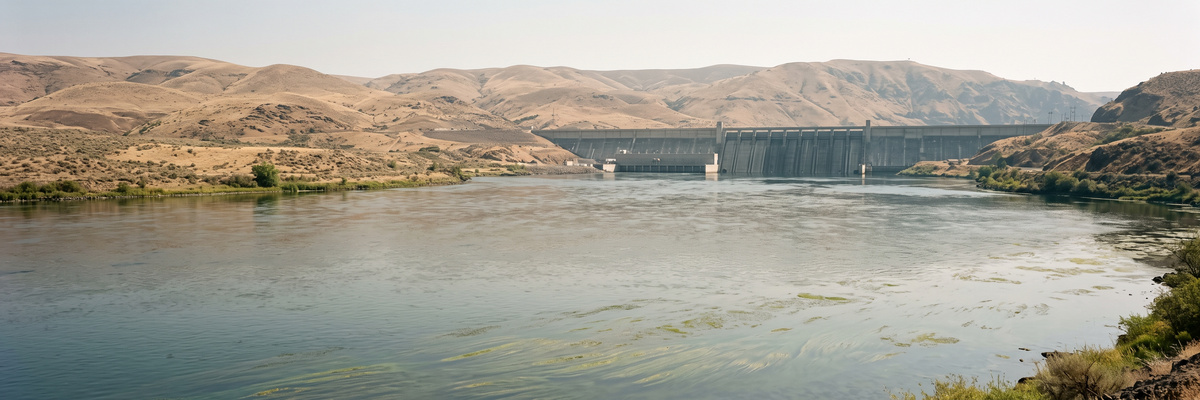
What happened. Whitman County Public Health confirmed microcystin, a liver toxin made by cyanobacteria (blue-green algae), in a bloom on the Snake River on August 18. It is the fourth year in a row the county has found toxic algae on the river, starting in 2023. This year’s bloom appears on and off along about 50 river miles between Blyton Landing and Little Goose Dam, slightly farther upstream than in past years.
Why there. Environmental health specialist Maddy Lucas told KLCC that dams create the conditions these blooms like: stagnant, warm water with a high nutrient load.
What to do. The county advises people, pets, and livestock to stay away from any part of the river with green or blue scum, which can look like spilled paint and can also show up brown, red, or pink. Boiling water does not remove the toxin.
The KETOS read. Boiling kills bacteria and leaves microcystin untouched, which is why a bloom calls for its own measurements. Nutrients, temperature, and the toxin itself tell a water manager when conditions are building and when a stretch of river is safe again. Four years in a row is a pattern, and a pattern can be monitored on a schedule instead of found by a passerby.
Sources: KLCC / Northwest Public Broadcasting, “Toxic algae is showing up in the Snake River for the fourth year in a row” (Oct 4, 2026), quoting Whitman County Public Health.
Two Clean Days in Jackson
What happened. On September 25, Jackson, Wyoming issued a town-wide boil water advisory after E. coli was found in raw groundwater from a town well on the National Elk Refuge. The well had not been called on for water in about two weeks, and the sample was taken before the water reached the town’s disinfection system. School was cancelled for a day, and restaurants adapted or closed for a short time.
How it ended. Repeat tests of the well came back negative. After two consecutive days of clean results, the town and the EPA lifted the advisory on September 28. Residents were told to flush their cold water lines and run dishwashers on a sanitize cycle.
What the town took from it. Public Works Director Johnny Ziem said the town and the EPA both wanted to be extremely cautious, and that the event showed every backstop working, from disinfection to public health communication and emergency management. The town is working with the EPA to bring the well back into service as soon as it is safe.
The KETOS read. Jackson’s response worked the way it is supposed to: one positive sample, a fast and cautious call, confirmation testing, and a lift backed by clean data. A well that sits idle is worth an extra look before it goes back into service, since water that hasn’t moved in weeks can change. Sampling it on return, and watching its basic chemistry as it comes back online, keeps the next startup routine.
Sources: KHOL / Wyoming Public Media, “Jackson lifts ‘extremely cautious’ boil water following clean tests” (Sep 28, 2026); Cowboy State Daily (Sep 25, 2026).
Texas Wants the Water Numbers First
What happened. On September 21, the governor of Texas directed the Texas Commission on Environmental Quality to issue no permits sought by data center projects until two audits are complete: one by ERCOT on data center interconnection to the grid, and one by the Texas Water Development Board on water use. The directive says data centers must not use water needed by local communities. TCEQ owes the governor’s office a compliance update by October 19.
What the water audit covers. The governor directed the TWDB to compel compliance with the state’s water-use survey requirements, pursue enforcement for past and future reporting failures, and work with ERCOT to gather information on data centers’ water consumption, water supply sources, and water-efficiency measures. The September directive builds on an August 3 order that paused large-load grid interconnections.
The KETOS read. Texas is asking data centers to account for their water, and to catch up on reporting the state already requires. Water use is the start. Cooling water chemistry, discharge quality, and stormwater runoff are what neighbors and regulators ask about next, and a facility that already has those numbers on file has a short answer ready.
Sources: Office of the Texas Governor, “Governor Abbott Directs TCEQ To Halt Data Center Permits” (Sep 21, 2026); Greenberg Traurig, “Texas Governor Directs a Halt on Data Center Permitting With State Agency Audits” (Sep 2026).
Test Kits Built for Data Centers
KETOS offers four lab testing packages built for the water streams at a data center, with every analyte listed before checkout and digital reports 5 to 7 business days after the lab receives the sample. Kits ship with sample bottles and chain-of-custody paperwork.
- Cooling Water ($629): 23 analytes for the cooling loop, including scaling and corrosion indicators, anions and nutrients, and a 13-metal panel by EPA Method 200.8.
- Discharge Monitoring ($949): 27 analytes for the outfall, including pH, temperature, total residual chlorine, conductivity, TDS, TSS, COD, BOD, nutrients, oil and grease by EPA Method 1664A, and RCRA 8 metals plus six more.
- Discharge + PFAS Premium ($1,649): the discharge package plus a 40-compound PFAS panel, 67 analytes in all.
- Stormwater ($469): pH, TSS, COD, nitrate plus nitrite, oil and grease, and a 6-metal benchmark panel.
Sources: KETOS, “KETOS launches the first water testing packages built for data centers” (Sep 2, 2026).
By the Numbers
- 7+ days: how long Cryptosporidium can survive in properly chlorinated water (CDC)
- 50%: rise in the US Legionnaires’ rate since 2020 (provisional CDC data via Circle of Blue)
- 50 miles: the stretch of the Snake River where this year’s toxic bloom appears (Whitman County Public Health)
- 6.7 miles: of Kress Creek and the West Branch DuPage River cleaned of thorium (EPA)
One Good Sign: A Creek Comes Off the Superfund List
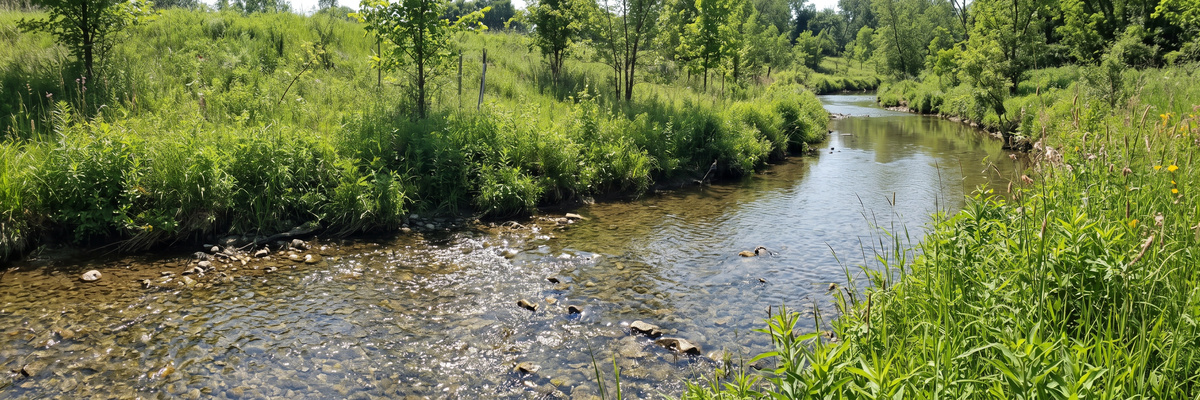
What happened. EPA has deleted the Kerr-McGee Kress Creek/West Branch DuPage River site in DuPage County, Illinois from the National Priorities List, the Superfund list, after cleanup targets were met. EPA, state, and local officials marked the cleanup with a celebration at McDowell Grove.
The history. From 1932 to 1973, the Rare Earths Facility in West Chicago made gas lantern mantles and radioactive metals. Runoff carried thorium residuals into Kress Creek, and from there into the sediment and banks of the creek and the West Branch of the DuPage River. Cleanup of the 6.7-mile site ran from 2005 to 2014, with restoration continuing through 2025, at a cost reported at nearly $150 million.
What delisting means. Coming off the list marks the end of the cleanup, and EPA’s oversight continues. EPA still runs five-year reviews to confirm the remedy keeps protecting people and the river, and it can act again if contamination nobody knew about turns up.
The KETOS read. A delisting is a measurement milestone: decades of sampling that finally showed the cleanup targets were met. The five-year reviews that follow keep measuring, so the result stays true.
Sources: EPA, “EPA, State, and Local Officials Celebrate Successful Cleanup of Kerr-McGee Kress Creek Superfund Site in DuPage County, Illinois” (Sep 2026); Federal Register, Deletion From the National Priorities List (Aug 20, 2026); Hoodline (Sep 2026); Daily Herald (Sep 14, 2026).
KETOS builds continuous water-quality monitoring for utilities and industry. If a story here touched a problem you own, we would like to hear how you see it: reply to the newsletter, or find us at ketos.co.