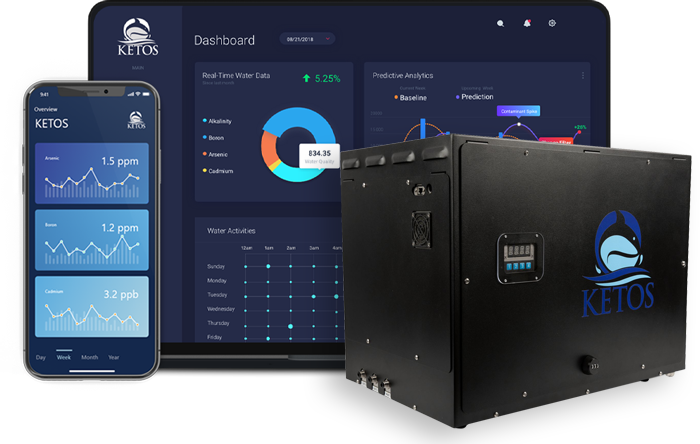



This week starts in South Africa, where a treatment plant went without chlorine and kept sending water to homes for three weeks. The other stories this week are about measurement too: how live chlorine and ammonia data hold a drinking water residual, a large study on lithium in tap water, four E. coli boil notices in small U.S. towns, and a North Carolina city that has funded its PFAS treatment. This page is the companion to our newsletter; each section stands alone.
Inside this week’s edition:
- Three weeks, zero chlorine
- Hold your residual every hour
- Lithium gets a closer look
- Four E. coli boil notices in 17 days
- By the numbers
- One good sign: Greensboro funds its PFAS fix
Three Weeks, Zero Chlorine
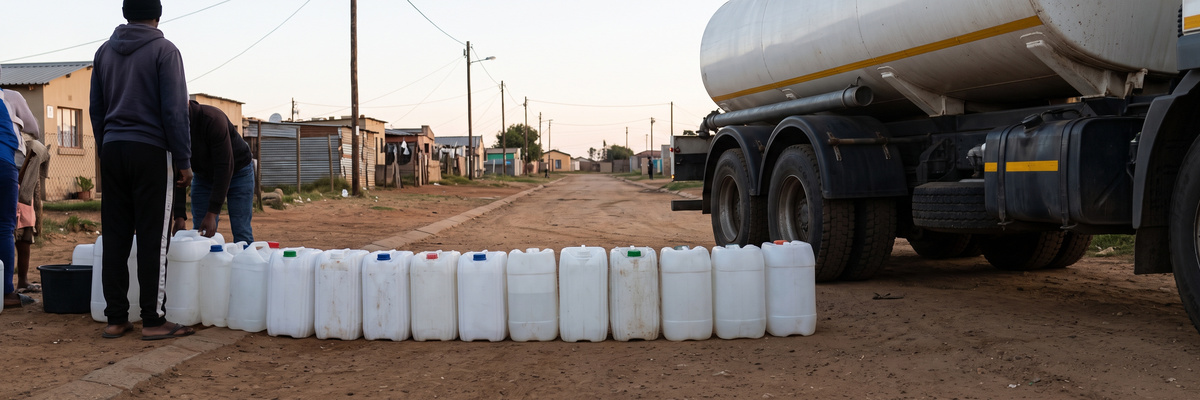
What happened. The Bronkhorstspruit Water Treatment Works serves Bronkhorstspruit, Zithobeni, Rethabiseng, Dark City, and Sokhulumi in the City of Tshwane, South Africa. A joint statement from the national Ministries of Health and of Water and Sanitation, the Gauteng Provincial Government, and the City of Tshwane says the city had difficulties with its chlorine supplier, and water from the plant went out unchlorinated from September 24 to October 14.
Who got sick. Between October 7 and 18, 408 cases of gastrointestinal illness were reported, most of them in children under four. New cases peaked at 72 on October 13 and fell to 16 on October 18. The National Institute for Communicable Diseases found norovirus, Campylobacter, and Shigella in stool samples and no cholera. No deaths had been reported as of the statement.
What the tests found. The Department of Water and Sanitation sampled on October 14 and found extremely high levels of E. coli and total coliforms in water from the treatment works and two reservoirs. The plant draws from the Bronkhorstspruit River, which the department describes as badly contaminated with sewage from dysfunctional wastewater treatment works upstream.
The warning that didn’t go out. South Africa’s 2025 Compulsory Standards for Water Services require a water services authority to tell residents when water is unsafe. The joint statement says the city failed to warn residents that the water had not been chlorinated and should not be used for drinking, cooking, washing, or bathing, even after boiling. The plant was closed on October 14, chlorine was restored on October 15, and the plant reopened on October 16, with residents told the water was not yet suitable for drinking.
What happens now. Since October 14 the city has trucked in water from the Cullinan Water Treatment Works, and 36 more tankers have been added. The Water Research Commission began testing on October 18 and expects to deliver its report by October 28.
The wider picture. South Africa’s 2025 Green Drop report audited 848 municipal wastewater systems. Only 14 earned certification, and 396, or 47 percent, were rated critical. Water researcher Anthony Turton told Daily Maverick that the national system is designed on an indirect reuse model, in which treated wastewater flows into the rivers that drinking water plants draw from. That puts extra weight on disinfection.
The KETOS read. A chlorine residual leaving the plant is the simplest daily proof that disinfection happened, and a reading of zero is the clearest alarm a drinking water system has. Its value depends on how fast it travels. Continuous residual data at the plant outlet and in storage puts that number in front of operators, managers, and anyone responsible for public notice every hour, so a falling residual is visible within the hour it happens.
Sources: Joint media statement by the Ministries of Health and Water and Sanitation, Gauteng Provincial Government and the City of Tshwane on Bronkhorstspruit water (October 19, 2026); IOL (October 20, 2026); TimesLive (October 21, 2026); Daily Maverick (October 21, 2026); Engineering News, 2025 Green Drop report coverage (April 1, 2026).
Hold Your Residual Every Hour
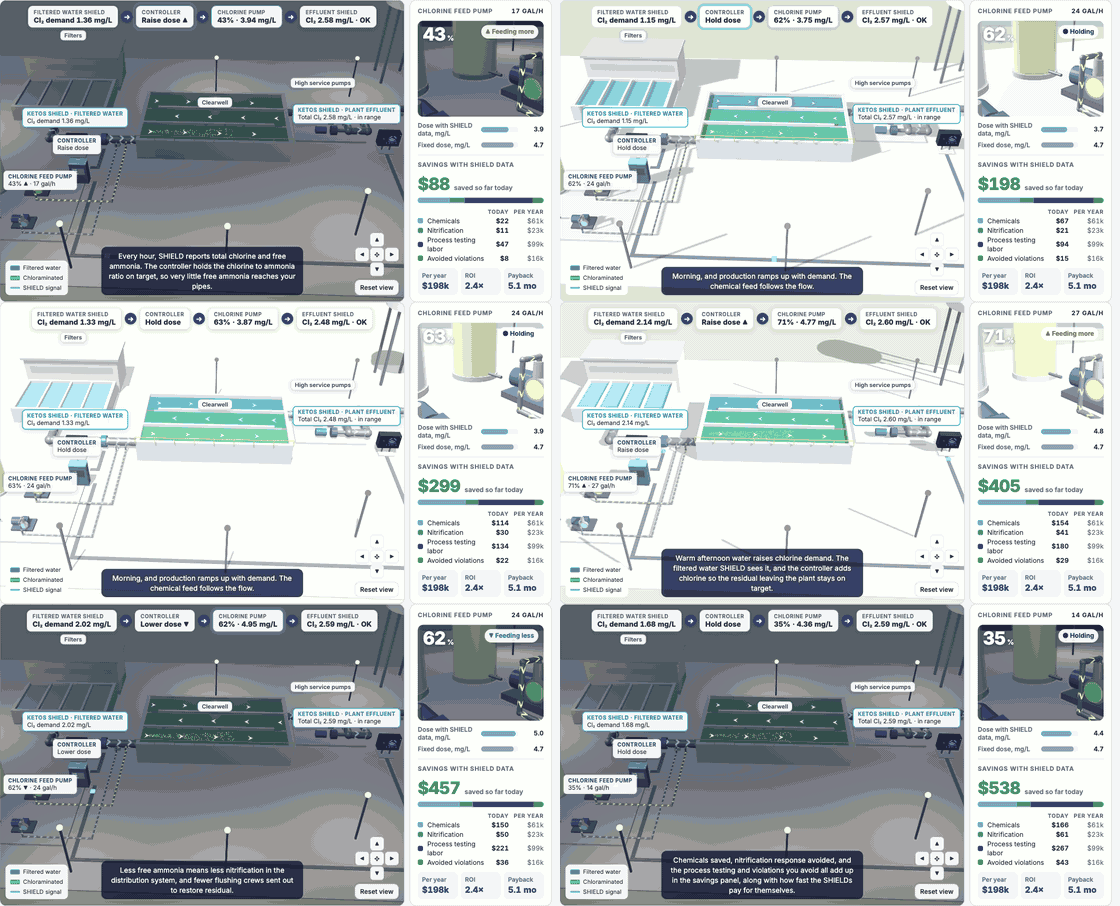
What it shows. H2ROI, the KETOS interactive calculator, now includes drinking water chloramine dosing. A drinking water plant has to send out the right disinfectant residual every hour of the day. In the model, two KETOS SHIELDs, one on the filtered water and one on the water leaving the plant, give the chemical controller the chlorine and ammonia data it needs to hold that residual.
How it works. Every hour, SHIELD reports chlorine demand on the filtered water and total chlorine and free ammonia leaving the plant. You set the minimum residual leaving the plant and the maximum target. The controller raises, lowers, or holds the chlorine feed to stay inside that window and keeps the chlorine to ammonia ratio on target, so very little free ammonia reaches the pipes. A side-by-side trace shows where a fixed dose would have run over the maximum as demand shifted through the day.
What it models. Enter your plant’s flow, chlorine demand, current dose, chemical prices, and testing routine, and H2ROI estimates savings in chemicals, nitrification response, process testing labor, and avoided violations, along with payback. You can export the results to Excel. A site assessment tailors every figure to your plant. H2ROI covers eight applications in all, including the wastewater aeration model we featured last week.
Try it: ketos.co/h2roi. Read the white paper: Real-Time Data for Aeration and Disinfection.
Concerned about contaminants in your water?
Get water testing from KETOS KELP using EPA-certified methodology, results you can trust, backed by real data.
Order a Water Test →Lithium Gets a Closer Look

The study. Researchers at UC San Francisco compared county-level lithium in drinking water with diagnoses of Wolff-Parkinson-White (WPW) syndrome among more than 2.3 million California children, published October 13, 2026 in the Journal of Clinical Investigation. WPW is a heart-rhythm condition caused by an extra electrical pathway in the heart. Counties with lithium at or above the 75th percentile had 71 percent higher odds of a WPW diagnosis, and counties above EPA’s lithium screening level had 29 percent higher odds. The authors report similar results in a statewide New York cohort.
Why lithium. These extra pathways are often seen with Ebstein’s anomaly, a congenital heart condition associated with mothers taking lithium as a medication during pregnancy. The researchers asked whether lower, environmental exposure in the womb might show a similar link.
What it can’t tell us yet. This is an ecological study: it compares counties, and it did not measure what any individual child or mother drank. The researchers describe the result as an association. UCSF cardiologist Gregory Marcus said, “we need more research to determine whether lithium is actually contributing to their development.”
Where U.S. systems stand. Lithium has no federal drinking water limit. EPA monitored it under the fifth Unregulated Contaminant Monitoring Rule (UCMR 5) and compares results to a non-regulatory health reference level of 10 µg/L. In EPA’s final data summary, 28.5 percent of small systems (serving 10,000 or fewer people) and 24.1 percent of large systems reported at least one lithium result above that level. EPA counts a result as above the level only when it exceeds 15 µg/L, because the level is expressed to one significant figure.
The KETOS read. Most utilities now have their first lithium numbers from UCMR 5, and those results are public. One round of samples is a starting point. Where results came in near or above the reference level, follow-up sampling across seasons and source wells shows whether the number holds steady or moves with the supply.
Sources: Journal of Clinical Investigation, “Elevated lithium levels in drinking water are associated with higher prevalence of Wolff-Parkinson-White diagnoses” (October 13, 2026); Medscape (October 2026); U.S. EPA, UCMR 5 Data Summary (July 2026).
Four E. coli Boil Notices in 17 Days

Slick, Oklahoma. On October 3, the Oklahoma Department of Environmental Quality ordered residents of Slick, a town of about 150 in Creek County, to boil their tap water after E. coli was confirmed in the supply.
Paducah, Texas. E. coli was found in Paducah’s drinking water on October 9, and the city issued a boil water notice. It lifted the notice on October 14 after follow-up results were submitted to the Texas Commission on Environmental Quality.
San Juan County, New Mexico. On October 16, about 8,683 users of the Lower Valley Water Users Association in Kirtland, Fruitland, and Waterflow were told to boil their water after the New Mexico Environment Department confirmed E. coli. The association later narrowed the advisory to County Road 6878 in Waterflow.
Weatherly, Pennsylvania. A routine sample collected on October 13 tested positive for total coliform and E. coli, and the borough issued a boil advisory on October 19. The borough says it needs two consecutive days of clean results before lifting it.
The KETOS read. In each of these towns, a bacteria sample did its job: it found a problem and triggered a notice. Confirmation sampling is what lifts a notice. In the meantime, chlorine residual and pH readings across the system show whether disinfection is holding and help crews decide where to flush and sample first.
Sources: Oklahoma DEQ via News On 6 and Hoodline (October 2026); NewsChannel 10 (October 13 and 14, 2026); KSJE and KRQE (October 2026); Times News (October 19, 2026).
By the Numbers
- 3 weeks: how long the Bronkhorstspruit plant ran without chlorine (September 24 to October 14)
- 14 of 848: South African municipal wastewater systems that earned Green Drop certification in the 2025 report
- 2.3 million: California children in the UCSF lithium study
- 28.5 percent: small U.S. water systems with a lithium result above EPA’s health reference level
- $260 million: Greensboro’s approved PFAS treatment upgrade at the Mitchell plant
One Good Sign: Greensboro Funds Its PFAS Fix
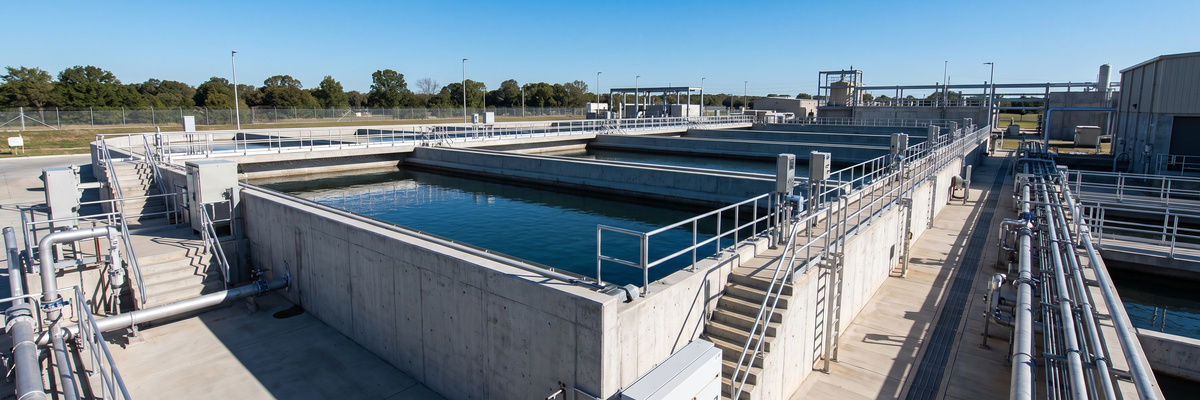
The vote. On October 6, the Greensboro, North Carolina city council unanimously approved about $260 million for The Haskell Company to upgrade PFAS treatment at the Mitchell Water Treatment Plant.
The design. The upgrade adds granular activated carbon contactors, large concrete basins holding about 15 feet of carbon, chosen after a yearlong pilot study that ended in 2022. The city expects the system to bring PFAS to near non-detect, and the work is scheduled to be complete by 2029. Together with upgrades at the Townsend plant, the city’s treatment work totals about $338 million.
The KETOS read. Carbon removes PFAS until it nears capacity. Regular PFAS sampling after the contactors shows when breakthrough starts, so media changes can be timed to the data.
Sources: WUNC (October 7, 2026); WFDD (October 2026).
KETOS builds continuous water-quality monitoring for utilities and industry. If a story here touched a problem you own, we would like to hear how you see it: reply to the newsletter, or find us at ketos.co.