


What Are Forever Chemicals?
Forever chemicals is the common name for a class of synthetic compounds called PFAS, short for per- and polyfluoroalkyl substances. A 2023 nationwide study by the U.S. Geological Survey detected PFAS in approximately 45% of U.S. tap water samples, making them one of the most widespread contaminants in American drinking water.
The name “forever chemicals” comes from their defining characteristic: they do not break down. Not in water. Not in soil. Not in your body. Understanding why requires a look at their chemistry.
The Chemistry: Why PFAS Last Forever
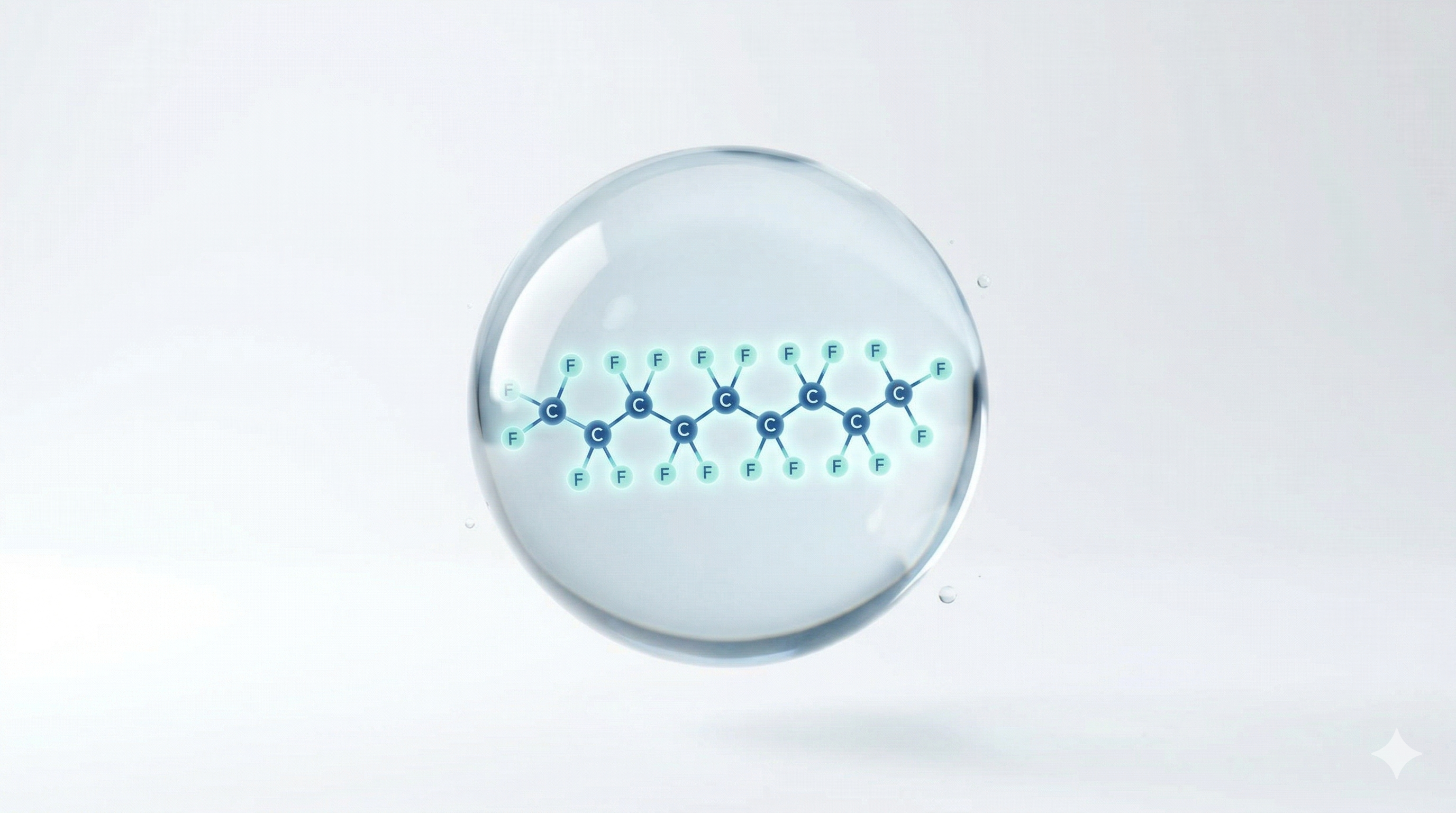
PFAS molecules are built around a chain of carbon atoms bonded to fluorine atoms. The carbon-fluorine bond is one of the strongest in organic chemistry, with a bond dissociation energy of approximately 536 kilojoules per mol according to the CRC Handbook of Chemistry and Physics. For comparison, carbon-hydrogen bonds (the backbone of most organic molecules) have a bond energy roughly 100 kJ/mol lower.
This means PFAS resist the processes that break down most organic pollutants: sunlight, heat, microbial activity, and chemical oxidation. Natural degradation pathways that work on pesticides, petroleum, and other pollutants are ineffective against PFAS. A study published in Environmental Science & Technology estimated that some PFAS compounds could persist in groundwater for over 1,000 years under typical environmental conditions.
There are more than 15,000 known PFAS compounds according to the EPA’s CompTox Chemicals Dashboard. They range from long-chain compounds like PFOA and PFOS (the most studied) to newer short-chain alternatives like GenX (HFPO-DA) that manufacturers introduced as “safer” replacements but which are now raising their own health concerns.
Concerned about contaminants in your water?
Get lab-certified water testing from KETOS KELP — results you can trust, backed by real data.
Order a Water Test →Where Do PFAS Come From?
PFAS have been manufactured since the 1940s. Their resistance to heat, water, and oil made them attractive for an extraordinary range of uses.
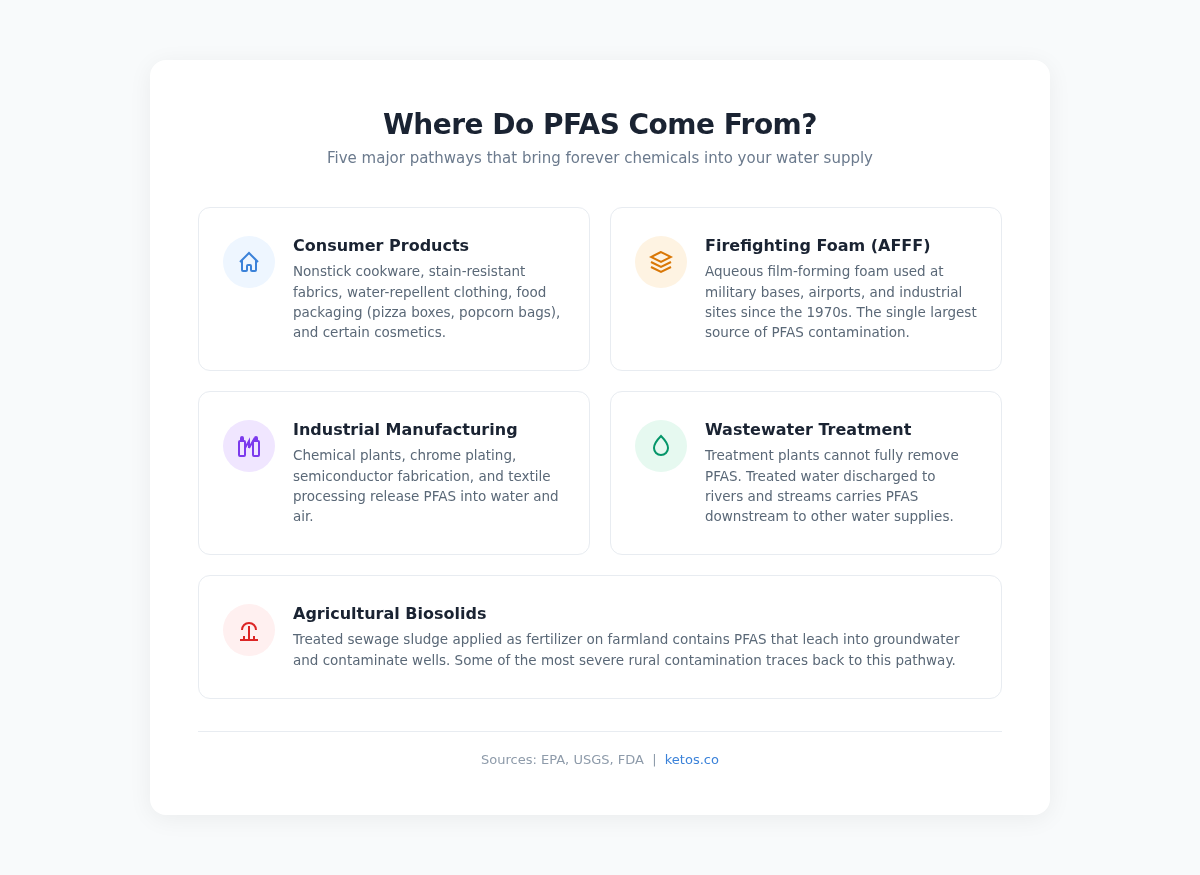
In your home, PFAS are found in nonstick cookware, stain-resistant carpet and furniture treatments, water-repellent clothing, food packaging (microwave popcorn bags, fast food containers, and pizza boxes), and certain cosmetics. The FDA has documented PFAS in food contact materials and has been phasing out certain uses since 2020.
In industry, the largest single source of PFAS contamination is aqueous film-forming foam (AFFF), a firefighting suppressant used at military bases, airports, and industrial facilities since the 1970s. Chemical manufacturing, chrome plating, semiconductor fabrication, and textile processing also release PFAS into the environment.
PFAS also enter water supplies indirectly through wastewater treatment plants (which cannot fully remove them) and through biosolids, the treated sewage sludge applied to agricultural land as fertilizer.
How PFAS Accumulate in Your Body
PFAS enter your body primarily through drinking water, but also through food, air, and skin contact with PFAS-containing products. Once inside, they bind to proteins in your blood and accumulate in your liver, kidneys, and other organs.
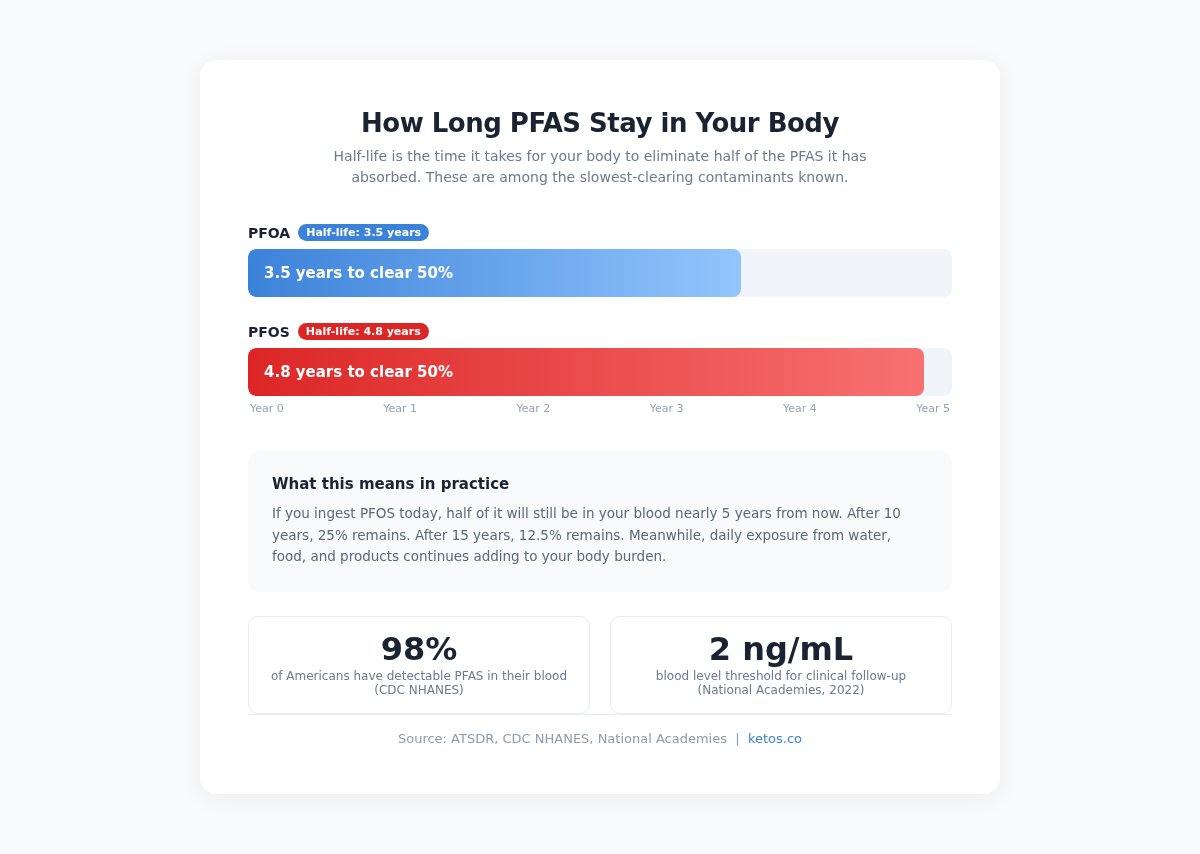
The rate at which your body eliminates PFAS is extremely slow. According to the Agency for Toxic Substances and Disease Registry (ATSDR), the half-life of PFOA in the human body is approximately 3.5 years, and for PFOS it is approximately 4.8 years. That means if you ingest a given amount of PFOS today, half of it will still be in your blood nearly five years from now.
The National Academies of Sciences, Engineering, and Medicine published a landmark report in 2022 that established clinical guidance for PFAS exposure. The report concluded that blood PFAS concentrations above 2 nanograms per milliliter (ng/mL) for PFOS or PFOA should trigger clinical follow-up, including monitoring for thyroid disease, kidney cancer, and other associated conditions.
Data from the CDC’s National Health and Nutrition Examination Survey (NHANES) shows that PFAS are detectable in the blood of approximately 98% of Americans tested. The concentrations vary widely by region, age, and proximity to contamination sources, but the near-universal detection rate underscores how pervasive exposure has become.
Health Risks: What the Research Shows
The evidence linking PFAS to serious health effects has grown substantially. In November 2023, the International Agency for Research on Cancer (IARC) upgraded its classification of PFOA to Group 1 (“carcinogenic to humans”) and PFOS to Group 2B (“possibly carcinogenic”). The Group 1 classification places PFOA in the same category as asbestos, benzene, and tobacco smoke.
A study from the USC Keck School of Medicine found associations between PFAS-contaminated drinking water and a range of rare cancers, including kidney, testicular, bladder, and breast cancer.
Beyond cancer, the ATSDR’s health effects summary identifies several other conditions linked to PFAS exposure:
Thyroid Disruption
PFAS interfere with thyroid hormone synthesis and regulation. Multiple epidemiological studies have found elevated rates of hypothyroidism in communities with high PFAS exposure.
Immune Suppression
Children exposed to elevated PFAS levels show reduced antibody response to vaccines. A 2020 study in the journal Environmental Health Perspectives found that children with higher PFAS blood levels had weaker immune responses to standard childhood immunizations.
Liver Effects
PFAS accumulate in the liver and are associated with elevated liver enzymes, increased cholesterol levels, and non-alcoholic fatty liver disease.
Reproductive and Developmental Effects
Research has identified associations between PFAS exposure and reduced fertility, pregnancy-induced hypertension, lower birth weight, and altered pubertal timing.
Children face disproportionate risk. Their bodies are smaller, their metabolic rates are higher, and their organs are still developing. The combination of lower body mass and longer remaining lifespan means that PFAS ingested in childhood have more time to accumulate and cause harm.
Why “Safer” Replacements Are Not Necessarily Safe
As regulators began restricting PFOA and PFOS, manufacturers shifted to short-chain PFAS and alternative compounds like GenX (HFPO-DA). These were marketed as safer because they have shorter half-lives in the body.
But shorter half-life does not mean harmless. A 2021 review in the journal Chemosphere found that many short-chain PFAS are more mobile in groundwater (harder to filter), more persistent in the environment, and in some cases have health effects comparable to their long-chain predecessors. GenX has been detected in drinking water in multiple U.S. states and is now regulated under the EPA’s 2024 drinking water rule.
The fundamental problem remains: any compound built on the carbon-fluorine backbone resists natural degradation. Replacing one forever chemical with another does not solve the underlying issue.
What You Can Do
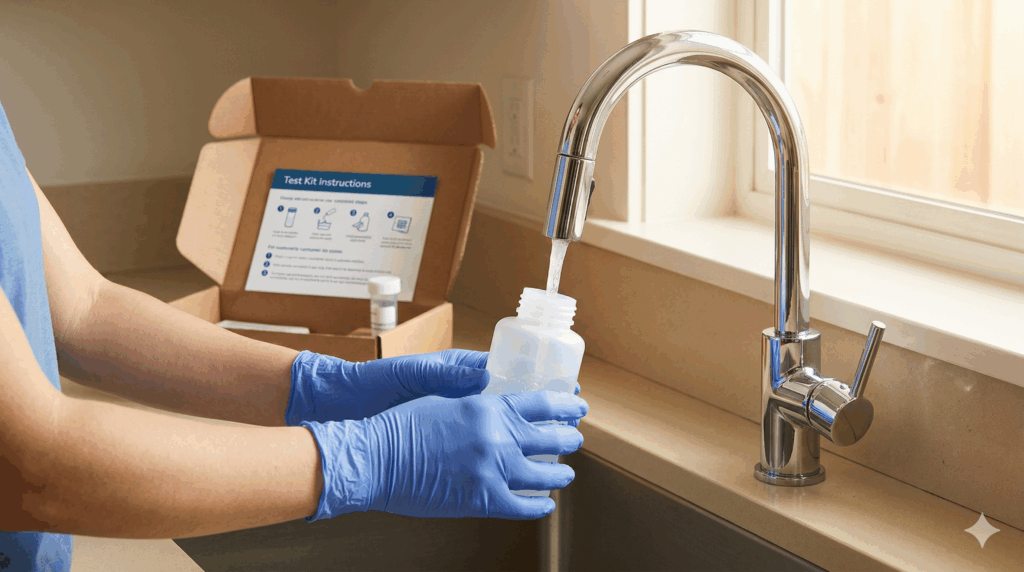
If you have never tested your water for PFAS, that is the most important first step. PFAS are tasteless, odorless, and invisible. Exposure is almost always unknowing. Understanding the science is essential context, but knowing your actual exposure level is what drives action.
For a detailed look at what your water utility is required to do (and what it is not), read our guide on PFAS regulations and drinking water standards. To compare testing options and understand how to collect a proper sample, see how to test your water for PFAS. To check whether contamination sources exist near your location, see our PFAS contamination lookup by zip code.
Or, if you are ready to test now: get a PFAS water test from KETOS KELP.
References
- U.S. Geological Survey. “Tap Water Study Detects PFAS ‘Forever Chemicals’ Across US.” July 2023. https://www.usgs.gov/news/national-news-release/tap-water-study-detects-pfas-forever-chemicals-across-us
- U.S. Environmental Protection Agency. “PFAS Master List of PFAS Substances.” CompTox Chemicals Dashboard. https://www.epa.gov/chemical-research/pfas-master-list-pfas-substances
- International Agency for Research on Cancer (IARC). “IARC Monographs Evaluate PFOA as Carcinogenic and PFOS as Possibly Carcinogenic to Humans.” November 2023. https://www.iarc.who.int/news-events/iarc-monographs-evaluate-pfoa-as-carcinogenic-and-pfos-as-possibly-carcinogenic-to-humans/
- USC Keck School of Medicine. “Study Links PFAS Contamination of Drinking Water to a Range of Rare Cancers.” https://keck.usc.edu/news/study-links-pfas-contamination-of-drinking-water-to-a-range-of-rare-cancers/
- Agency for Toxic Substances and Disease Registry (ATSDR). “PFAS and Your Health: Human Exposure.” CDC. https://www.atsdr.cdc.gov/pfas/hcp/clinical-overview/human-exposure.html
- ATSDR. “PFAS and Your Health: Health Effects.” CDC. https://www.atsdr.cdc.gov/pfas/health-effects/index.html
- National Academies of Sciences, Engineering, and Medicine. “Guidance on PFAS Exposure, Testing, and Clinical Follow-Up.” 2022. https://nap.nationalacademies.org/catalog/26156/guidance-on-pfas-exposure-testing-and-clinical-follow-up
- CDC National Health and Nutrition Examination Survey (NHANES). “PFAS Data Tables.” https://www.cdc.gov/exposurereport/data_tables/pfas_table.html
- U.S. Food and Drug Administration. “Authorized Uses of PFAS in Food Contact Applications.” https://www.fda.gov/food/process-contaminants-food/authorized-uses-pfas-food-contact-applications
Test your water for PFAS: KETOS KELP provides EPA-certified lab analysis of 30+ PFAS compounds with fast digital results. View testing packages.