


Four water stories from the first week of August 2026, each with the numbers behind it and a short KETOS read. This page is the companion to our newsletter; each section stands alone.
Inside this week’s edition:
- The week someone else ran the water
- The water behind the lettuce
- Five states, one week: the data-center water fights
- Flint’s last lead pipe is out
The week someone else ran the water

Starting July 26, intruders reached internet-exposed Rockwell Automation MicroLogix 1100 and 1400 programmable logic controllers at municipal water and wastewater systems, changed device passwords and IP addresses, and locked operators out of their own equipment. More than 30 Minnesota systems were affected, including Plymouth, South St. Paul, and Braham; incidents spread to Michigan and at least five other states by August 1. Documented consequences included pressure loss and localized flooding. The FBI and EPA issued a joint advisory on July 30, and investigators noted the absence of any ransom demand, unusual for intrusions of this kind.
Utilities responded by taking systems to manual operation, and drinking water service continued through the incident window.
On August 3, security firm Forescout scanned the public internet and found 4,407 MicroLogix controllers exposed worldwide, 2,844 of them in the United States, including 22 in the specific cities that had been attacked. Nineteen of those 22 were still running firmware carrying a vulnerability published in 2017 (CVSS 8.6). The attack required no novel technique, only equipment left reachable from the internet and firmware years behind on patches.
The KETOS read
The intrusion targeted control systems, and the defense of control systems belongs to network security. What a water operation can control is how well it understands its own water while operations are disrupted. Continuous chemistry monitoring with KETOS SHIELD produces an independent, timestamped record of what is actually in the water, generated and delivered outside the plant’s control network, so that during a manual-operations window the team still makes decisions from live data rather than the last grab sample.
Sources: FBI/EPA joint advisory (Jul 30); CBS News (Jul 31); The Hacker News and CyberScoop on the Forescout scan (Aug 6).
The water behind the lettuce
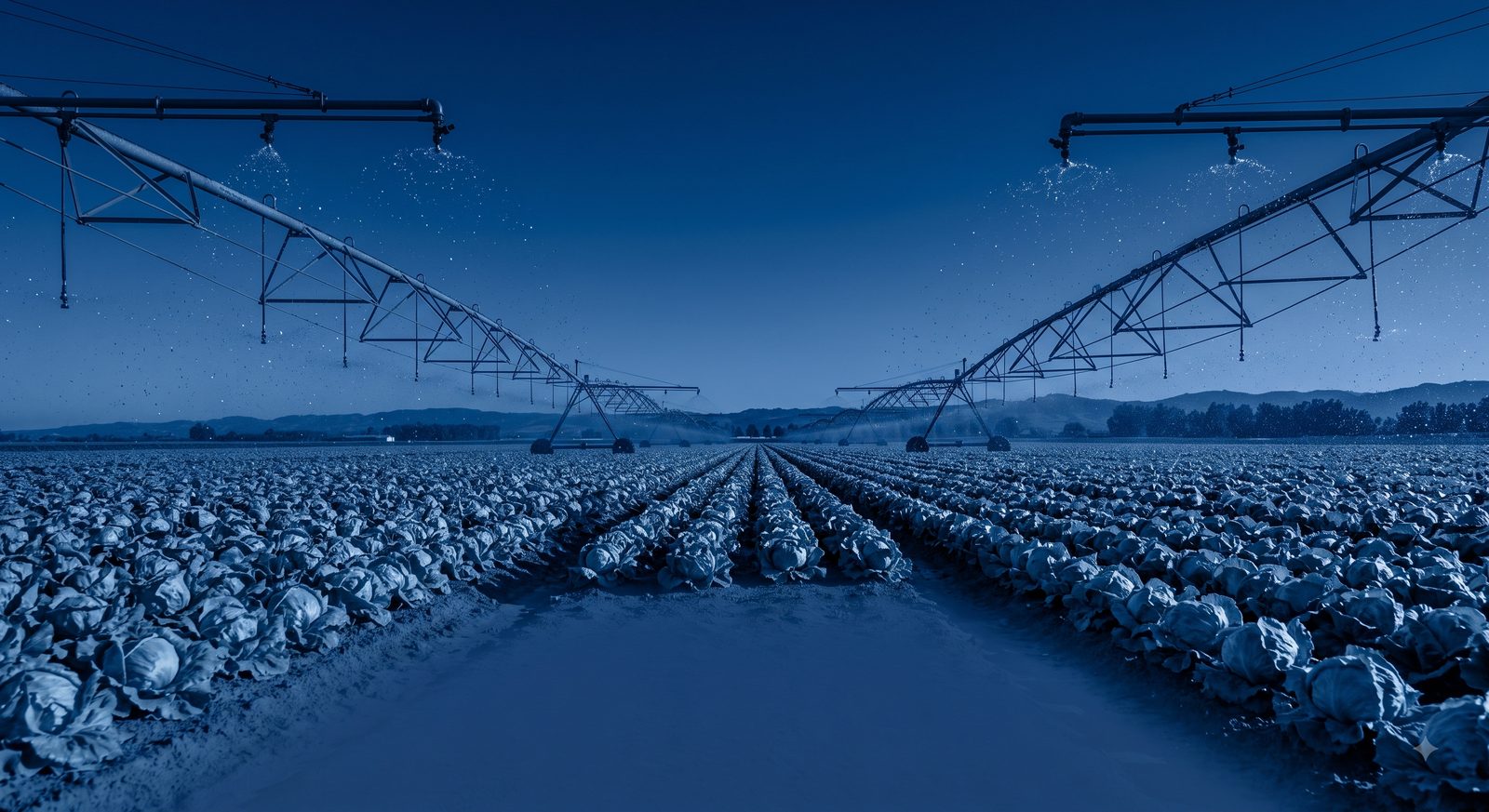
The CDC’s August 5 update put the national Cyclospora outbreak at 6,358 illnesses across 15 states, with 278 hospitalizations and two deaths, both in Michigan in people with underlying conditions. FDA traced illnesses at Taco Bell locations to iceberg lettuce from Taylor Farms de México, and on July 17 the company recalled all iceberg lettuce sourced from central Mexico, product that had shipped to 29 states.
Cyclospora cayetanensis moves through water. A systematic review and meta-analysis of 33 studies (Naganathan et al., Epidemiology & Infection) pooled prevalence by water type and found the parasite in 17.12% of agricultural irrigation water samples, the highest of any category tested. Treated municipal supply water sat at 0.18%, and groundwater at 0.00%. Surface water used for irrigation carries the highest load, and the 2023 USDA irrigation survey attributes roughly 45% of US irrigation water to surface sources.
Across produce outbreaks, the pattern keeps pointing upstream to the water that touched the crop. FSMA’s agricultural water requirements ask growers to assess and test their water systems, but scheduled sampling of a variable source leaves long, unobserved gaps between data points.
The KETOS read
Irrigation and process water are testable inputs, and the toolset exists on both cadences. KETOS KELP runs laboratory panels using EPA methods with documented chain of custody, suited to the periodic compliance record. KETOS SHIELD monitors water chemistry continuously, suited to catching a variable source behaving badly between scheduled samples. Producers who treat water as a monitored input rather than an assumed constant close the blind spot this outbreak just illustrated.
Sources: CDC outbreak update (Aug 5); FDA traceback and recall notices (Jul 17); Naganathan et al., Epidemiology & Infection vol. 150 (published online Dec 2021); USDA Irrigation and Water Management Survey (2023).
Concerned about contaminants in your water?
Get water testing from KETOS KELP using EPA-certified methodology, results you can trust, backed by real data.
Order a Water Test →Five states, one week: the data-center water fights
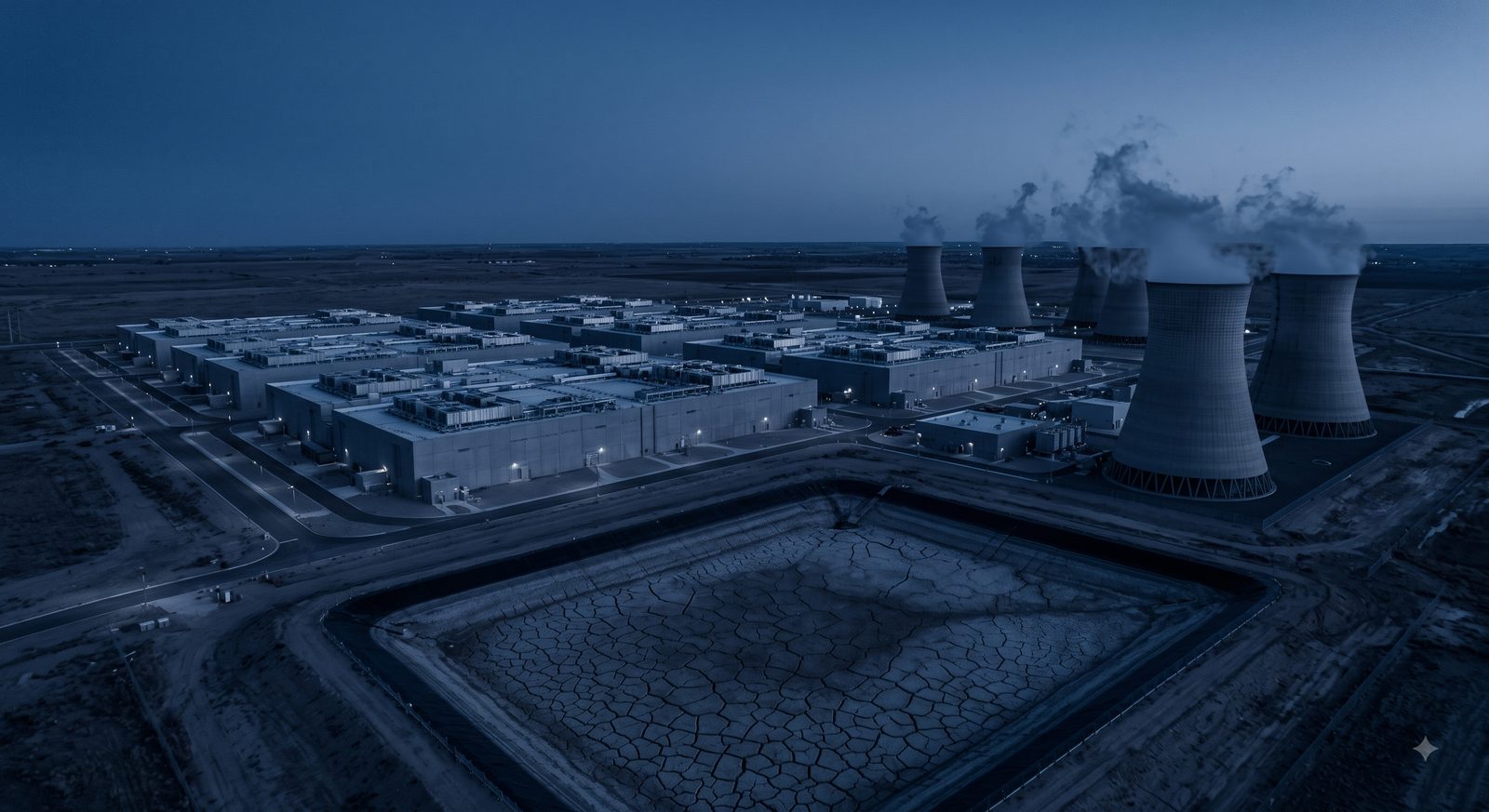
The first week of August produced a run of data-center water decisions with no precedent in a single news cycle:
- Grayslake, Illinois (Aug 8). Nine Lake County residents sued the village, T5 Data Centers, and Alter Asset Management over the approved 472-acre, 10-million-square-foot campus with a projected 1.55 GW draw, alleging Open Meetings Act violations; T5 had already suspended its wetland-permit application under community pressure.
- Virginia (Aug 3). A state groundwater study concluded that “an industrial data center using evaporative cooling is unlikely to find a reliable, sufficient groundwater supply anywhere in eastern Virginia.” One western Virginia campus had reserved up to 8 million gallons a day against a regional treatment plant that produces 10 to 12 million gallons daily in total. State Sen. Glen Sturtevant asked Gov. Spanberger for an executive-order moratorium.
- Tucson, Arizona (Aug 6). The Mayor and Council adopted the city’s first large-scale data-center ordinance on a 6-1 vote: no potable water for cooling without a separate permit, council sign-off above 7.48 million gallons a month, and a half-mile buffer from homes and schools.
- Effingham County, Georgia (Aug 7). The approval process for OpenAI’s $20B “Project Camellia” campus includes a binding water-protection agreement restricting cooling water to surface rivers and barring withdrawals from wells and the Floridan aquifer.
- Nye County, Nevada (Aug 4). More than 3,400 residents petitioned to ban data centers in the Pahrump Valley, which sits over a critically over-appropriated aquifer. The commission meeting ran past capacity with four hours of comment and closed without a vote on the ban.
The backdrop is scarcity and scale at once. Lake Mead recorded its lowest level ever on August 7, at 1,040.5 feet and 26.8% of capacity, while a data-center developer litigates against California’s Imperial Irrigation District for 880 acre-feet a year of Colorado River water the district declined to supply. The Congressional Research Service puts US data-center water consumption at roughly 17 billion gallons in 2023, up from 5.6 billion in 2014, with 97% drawn through ordinary municipal systems and no federal requirement to disclose usage, source, or efficiency.
The KETOS read
Every one of these fights turns on numbers that mostly do not exist yet: how much water a facility takes, what its discharge carries, and what changed in the receiving system. Communities and operators end up arguing from projections because measurement was never made a condition. Our July 2026 whitepaper, The Measurement Gap in Data-Center Cooling Water, covers discharge chemistry, microbial risk, and what a defensible baseline looks like at hyperscale sites.
Sources: Lake & McHenry County Scanner (Aug 8); Cardinal News (Aug 3); AZPM (Aug 6); Atlanta News First (Aug 7-8); Pahrump Valley Times (Aug 4); Western Water (Aug 4, Aug 7); Congressional Research Service report (Jul 31).
Flint’s last lead pipe is out
On August 3, the City of Flint confirmed that no active lead service lines remain. Under the federal court settlement, crews excavated at 31,930 addresses and replaced 11,600 lead lines, with 1,380 more cut and capped at vacant properties. The work ended six years past the settlement’s original 2020 deadline. Resident advocate Melissa Mays marked the milestone and the delay in the same breath:
“checking my watch it’s currently August of 2026, so what’s been going on to drag this out?”
The national picture is moving the same direction. Pittsburgh has replaced more than 27,000 lead lines since 2016 and targets a lead-free system by the end of 2027, and EPA’s latest tranche of the infrastructure law’s dedicated lead funding sent nearly $2.9 billion to states in May.
The KETOS read
Replacement programs live and die on data: which lines are lead, which water shows it, and whether the fix held. Continuous monitoring gives a utility the water-side record across that whole arc.
Sources: NRDC settlement announcement (Aug 3); WCMU/Michigan Public Radio (Aug 3); WPXI on Pittsburgh (Jul 29); EPA DWSRF announcement (May 20).