


America is having a loud argument about how much water data centers drink. This page is about the quieter questions underneath it: what that water carries when it comes back, who is measuring it, and what happened in the one city that thought it had the problem solved. This page is the companion to our newsletter; each section stands alone.
Inside this week’s edition:
- The Cheyenne warning
- What data centers send back
- A president, a governor, and 474 gigawatts
- Around the country: ten days of flashpoints
The Cheyenne Warning: “Low Water Use” Is Only Half the Test
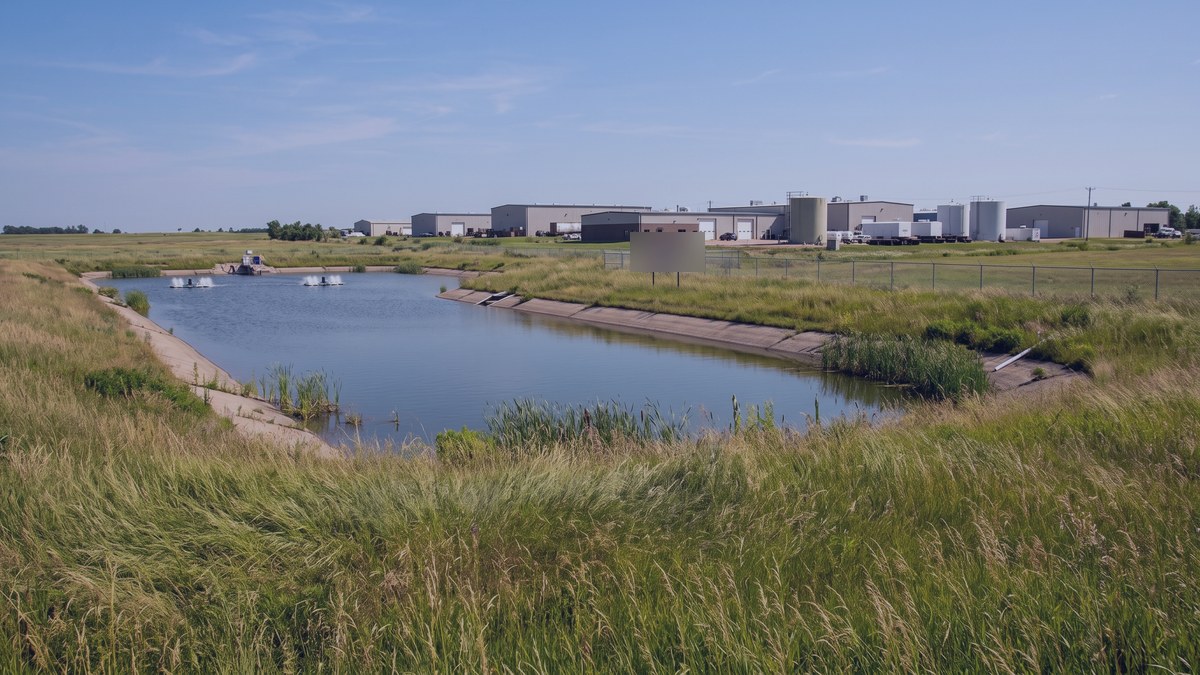
Cheyenne, Wyoming should be the data center industry’s favorite example. Mayor Patrick Collins has said publicly that the city’s “narrative does not allow for evaporative cooling or using large amounts of water,” so facilities there run closed-loop or air-cooled systems, helped by altitude and a cool climate. By the mayor’s own testimony to the Wyoming Legislature, the city’s three data center campuses, 13 operating buildings in all, use about 200 acre-feet of water a year. That is roughly 1.48% of the city’s use, against an annual firm yield of 22,000 acre-feet. On the usage scoreboard, Cheyenne won.
Then, on January 15, 2026, routine testing at a city wastewater plant turned up white bacterial colonies. By February 23 the Wyoming Public Health Laboratory had identified them: Cupriavidus gilardii, a rare, metal-resistant soil bacterium that can pose a risk to immunocompromised people on direct exposure. By March 24, the Board of Public Utilities had traced it to fill-and-flush cooling-system wastewater discharged from the construction site of Meta’s $800 million, 960-acre campus on the city’s south side, and revoked the site’s discharge privileges.
The rest of the city heard about it in July. On July 2 the utility named the source and suspended all data center industrial wastewater discharge citywide, fill-and-flush and closed-loop purges alike, until further notice. The damage by then: two water reclamation plants offline for months of cleanup, a 3-million-gallon reuse pond affected, and a city forced to irrigate its parks and sports fields with drinking water through the start of summer. Cheyenne’s drinking water itself was never affected; the bacterium stayed in the reclaimed system used for irrigation.
The accountability question is now in dispute. The utility fined the site owner, Goat Systems LLC (the entity behind Meta’s campus), $10,000 plus investigation and treatment costs. Meta appealed on July 14, arguing the discharge permit was actually held by its construction firm, Fortis Construction, and asking for a refund and a contested-case hearing. City Councilman Mark Rinne’s response: “Maybe they named the wrong contractor, but where does the buck stop?” As of mid-August the hearing is pending and the citywide discharge suspension stands.
The KETOS read
Cheyenne is the cleanest natural experiment the country has run on this question. A city that genuinely solved the usage problem, with the strictest cooling expectations of any data center market, still lost its water reuse system for months to a quality event, and found out from a routine grab sample weeks after the discharge began. Water quality shifts day to day, long after the permit’s usage figure is settled, which is why the version of this story that ends well has the return flow measured continuously at the point of discharge, long before anything reaches the treatment plant. We wrote about the contamination side of data center wastewater before this happened; Cheyenne is what it looks like in practice.
Sources: Cowboy State Daily (Jul 2, 15, 22); KOTA TV (Jul 26); Fortune (Jul 10); Cowboy State Daily (May 8, cooling and usage context); Laramie Boomerang via wyomingnews.com (Mayor Collins’s Select Water Committee testimony).
What Data Centers Send Back, and Who Is Checking
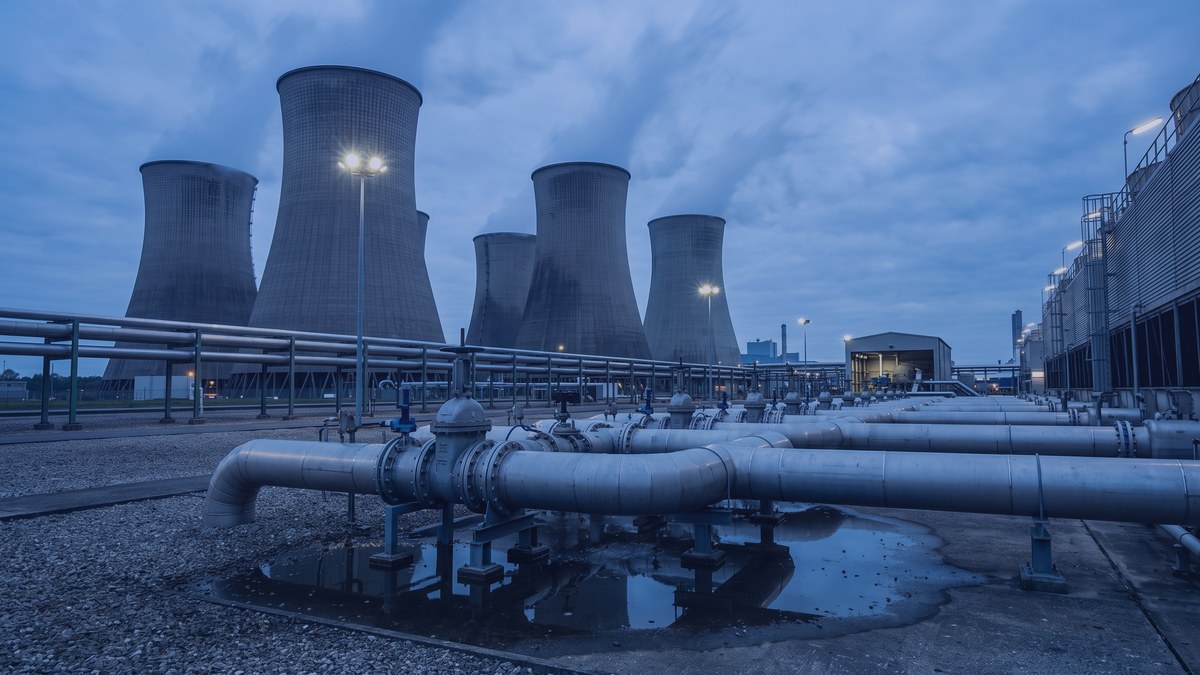
Cooling water comes back. Some of it evaporates, and the rest returns to a sewer plant or a stream as blowdown, the concentrated purge that keeps cooling towers from scaling up. Industry water-treatment references agree on what it typically carries: dissolved solids concentrated well above the intake water, chlorides and silica, biocides, corrosion and scale inhibitors, phosphorus, zinc, residual chlorine, and heat. Newer engineered-fluid liquid cooling adds PFAS and refrigerant risks to the list. A 2026 University of Georgia extension report makes the sharper point: the industry’s standard efficiency metric, Water Usage Effectiveness, can look excellent while a facility discharges large volumes of undertreated blowdown every day, because the metric grades the intake side of the pipe and leaves the return flow unscored.
Regulators have started to notice, and the first attempt did not survive contact with politics. On January 9, 2026, Ohio EPA proposed a general discharge permit built specifically for data centers, covering cooling tower blowdown, boiler blowdown, and non-contact cooling water, with limits on temperature, oil and grease, suspended solids, chlorine, phosphorus, pH, and dissolved solids. On July 21, after more than 7,000 public comments, the agency withdrew it and went back to case-by-case individual permits. The comments cut both ways, but the quotes that survived the fight came from the quality side. State Senator Kent Smith: “there is no long-term economic benefit to contaminated water.” State Senator Bernie Moreno: “Ohio should not compromise the integrity of our waterways to help data centers.”
The chemistry here predates the AI boom, and it has been solved before. In Quincy, Washington, EPA’s water reuse case study records that discharges from the region’s data centers, a cluster that includes Microsoft, Yahoo, Sabey, Intuit, and Vantage, carried more dissolved solids than the municipal plant was designed to treat. The fix was the Quincy Water Reuse Utility, a $31 million facility financed entirely by Microsoft under a 30-year agreement with the city, running since June 2021 with zero environmental discharge. In Virginia, Loudoun Water has supplied reclaimed water to about 40 data centers since 2010 and delivered more than 750 million gallons of it in 2025, though the county’s data centers still drew 899 million gallons of potable water in 2023, up 250% in four years. And in Oregon’s Lower Umatilla Basin, where the state apportioned groundwater nitrate sources back in 2011, Amazon Data Services paid $20.5 million in March to settle its share of a contamination case that is still running.
The KETOS read
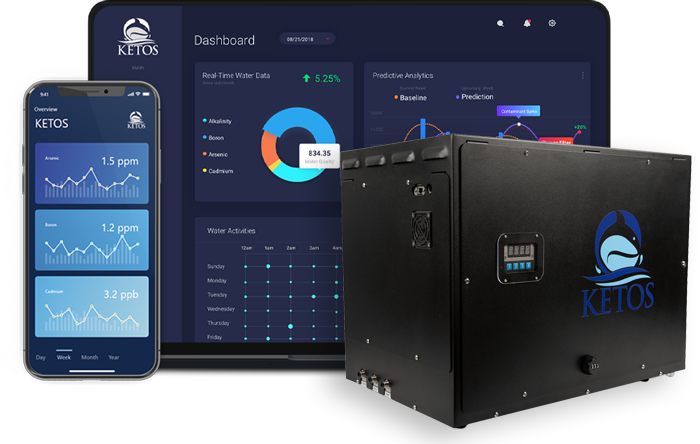
Every fight in this section is, underneath, a measurement fight. Quincy got fixed when the blowdown was characterized well enough to design around. Ohio’s permit died partly because nobody could agree on what data center discharge actually contains, facility by facility. The operators who come out of this era with their reputations intact will be the ones holding continuous, parameter-level data on their intake and their return flow, because “we monitor our water in real time, here is the record” is the only answer that ends a town hall argument. That is the instrument KETOS SHIELD was built to be, and it works the same whether an operator is proving a discharge clean or a utility is checking the claim. Our July 2026 whitepaper, The Measurement Gap in Data-Center Cooling Water, covers the discharge chemistry and what a defensible baseline looks like at hyperscale sites.
Sources: Ohio coverage via NBC4 Columbus, The Vindicator, ABC6 (Jul 21); UGA CAES Field Report TP121 (Saha, 2026); EPA Water Reuse case study, Quincy, WA; loudounwater.org; Oregon DEQ 2011 source apportionment and settlement coverage via OPB.
Concerned about contaminants in your water?
Get water testing from KETOS KELP using EPA-certified methodology, results you can trust, backed by real data.
Order a Water Test →The Politics Wave: A President, a Governor, and 474 Gigawatts
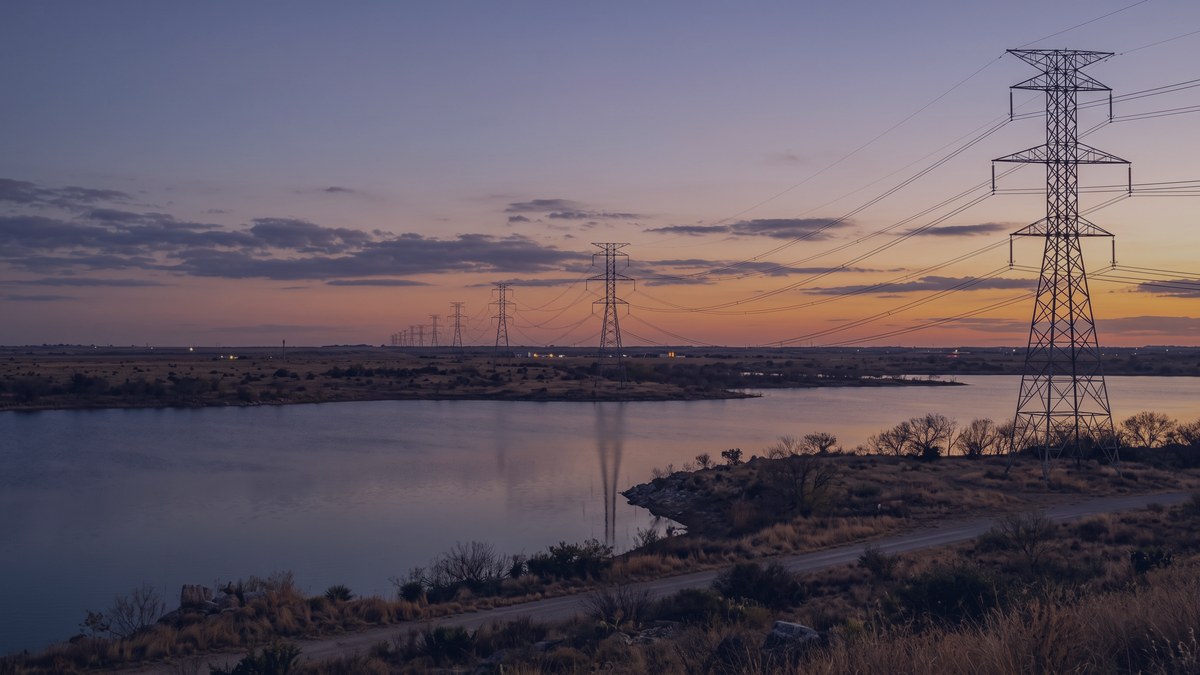
The most revealing water story in the country right now is a piece of grid paperwork in Texas. On August 3, Governor Greg Abbott directed Texas regulators and ERCOT to audit data center projects in the interconnection queue before more of them advance. The queue holds requests totaling more than 474 gigawatts, roughly 90% of it data centers, and state regulators say 250 to 300 projects fall under the review. Defending the directive, Abbott spokesperson Andrew Mahaleris said “less than 10% of data centers responded to the state’s requests for them to report their power and water usage.”
Within days, President Trump told Punchbowl News the pause was “a mistake,” arguing data centers “could be bigger than oil.” Abbott’s office held its ground. Whatever the outcome, the paperwork has already changed: projects in the Texas queue must now disclose projected annual and peak water consumption, anticipated water sources, and cooling technology before they connect to the grid. Water moved from the sustainability report to the interconnection file.
Texas learned how much it was missing by asking politely and getting a response rate under 10%. Senator Dick Durbin’s Data Center Water and Energy Transparency Act, which would make that reporting mandatory nationwide, has sat in Congress since March. Public sentiment is moving faster than the legislation: when Gallup asked Americans for the first time this spring whether they would want a data center built in their area, 71% opposed, 48% of them strongly, with 25% in favor.
Regulators are starting to answer the other hard question, who pays, and Oregon went first. On July 7 its utility commission approved a 29.7% rate increase for Portland General Electric’s large-load customers, the over-20-megawatt class built for data centers and crypto miners, in the same order that cut residential rates 1.3%. When a water and power question climbs this far up the political ladder, from county zoning boards to governors and presidents inside a single summer, it usually means the measurement and disclosure that should have settled it quietly never happened.
The KETOS read
Disclosure is arriving one jurisdiction at a time, and it is arriving in the shape of specific numbers: projected consumption, named sources, cooling technology, and soon, we expect, discharge characterization. The projects that clear these reviews comfortably will be the ones already holding real operating data at the frequency the question gets asked, instead of assembling an estimate after the request arrives. Texas is one state and one queue, and the question it now asks in writing is one every utility board in the country just learned it is allowed to ask.
Sources: Office of the Governor of Texas (Aug 3); Texas Tribune via KERA News (Aug 7); Newsweek (Trump remarks); durbin.senate.gov (Mar 2026); Gallup (fielded Mar 2-18, published May 13, n≈1,000); OPB (Jul 7, Oregon PUC order).
Around the Country: Ten Days of Flashpoints
Chicago (Aug 11). Mayor Brandon Johnson signed Executive Order 2026-5, tightening air-permit review for data center equipment including diesel backup generators, adding noise rules, and creating a cross-departmental vetting process that explicitly weighs water use, energy demand, and cumulative community impact. The order also calls on City Council to enact a temporary moratorium; the city counts about 39 data centers operating or planned. (CBS Chicago; chicago.gov)
Fort Worth (Aug 11). The council voted unanimously to start the legal process for a possible 90-day data center moratorium, and 10-1 to require ERCOT-approval documentation with applications and to create an 11-member Data Center and Infrastructure Commission. Under state-mandated steps, the moratorium itself could take effect around February 2027 at the earliest. The contested Black Mountain Energy site plan is on the August 25 agenda. (KERA News; CBS Texas)
Edgerton, Kansas (Aug 14). After residents petitioned to ban high-impact data centers and the council declined to adopt the ordinance, the city sued its own residents, asking a Johnson County court to void the petition. Among the city’s arguments: it controls neither the water district nor the electric utility that would serve the project. (KCTV5)
Grayslake, Illinois (filed Jul 31). Nine residents and a community group sued the village and developer T5 over a 472-acre, roughly 1.55-gigawatt campus, alleging Open Meetings Act violations and that the project was identified as a data center only late in approvals. First hearing October 30. The developer has suspended its wetland-permit application indefinitely. (Lake and McHenry County Scanner)
Sealy, Texas (Aug 14). Dozens of Austin County residents drove to a CleanSpark community meeting in tractors, trailers, and trucks to protest water, noise, and light concerns. (KPRC Houston)
El Paso (Aug 5). A standing-room-only town hall on Meta’s proposed data center put El Paso Water and El Paso Electric in front of an overflow crowd, with shouting over water and power commitments. (KFOX El Paso)
The Week in Water is written by the team at KETOS. Reply to the email and tell us which of these you want more of; we read every response.