


The automotive industry is not just adapting to a more sustainable future by embracing electrification and offering hybrid vehicle options. Many top manufacturers are also taking a proactive stance in showcasing their commitment to future sustainability by openly embracing water stewardship practices.
With water scarcity becoming an increasingly urgent global issue, auto manufacturers recognize the importance of effectively managing their water resources. After all, water is essential throughout the production process, and without careful management, the industry could face disruptions, increased costs, and environmental degradation. Water stewardship will become a critical aspect of successful production strategy across a wide swath of industrial manufacturing, and automakers are getting creative to meet aggressive commitments over the coming decade.
Water Management in the Automotive Industry
Water management is crucial in the automotive industry because water plays a significant role in everything from metal finishing to paint application. The industry is one of the most essential industrial users of water globally. For example, the top automakers use 100 million cubic meters collectively yearly. With the rising pressure on water resources, this usage level remains untenable, especially with other industries competing for limited resources and local communities demanding safe water access. Therefore, automakers are becoming stricter about how much water they use and are finding more ways to recycle water within their production processes.
Water Quality Parameters That Automakers Care About
Automakers must monitor several key water quality parameters to ensure seamless operations. These include:
Monitoring these parameters helps maintain water quality for cooling, washing, and painting processes. For example, pH levels are crucial in preventing corrosion during metal finishing, while controlling oxygen helps reduce harmful organic compounds in wastewater. By keeping a close eye on these metrics, automakers can avoid costly damage to equipment and reduce their environmental footprint. And, by understanding the exact level of each parameter in the water they use, operators can better manage water recycling and remediation initiatives.
Need real-time water quality monitoring?
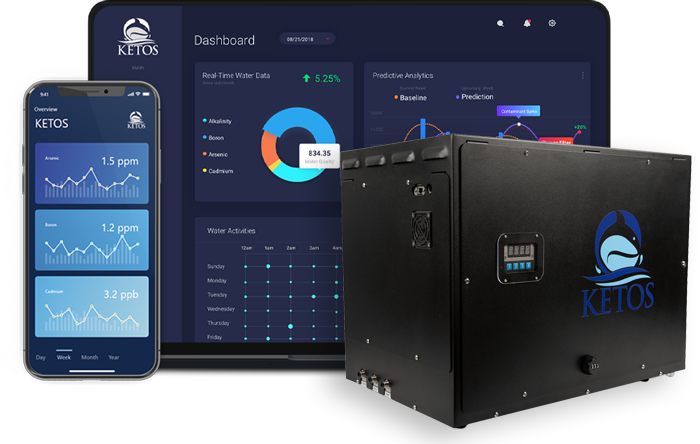
KETOS SHIELD continuously monitors 30+ parameters, replacing manual testing with automated, lab-accurate data.
Schedule a Demo →Automotive Industry Water Consumption
While the automotive manufacturing process is undeniably water-intensive, many do not understand the scope of water usage across the industry. The average car requires a staggering 39,000 gallons of water throughout its production lifecycle due to the complexity of production itself. Water is used in every aspect, from extracting raw materials to assembling and painting vehicles. The paint shop, in particular, is a significant consumer of water. Given these vast quantities, automakers must focus on reducing consumption and finding ways to recycle and reuse water.
Leading Brands in the Auto Industry and Their Water Stewardship Commitments
Several of the world’s largest automakers are stepping up and leading the charge in water stewardship. They are setting ambitious goals to reduce consumption, improve water quality, and support local communities, paving the way for a more sustainable future.

General Motors
General Motors (GM) is committed to managing water use efficiently, especially in water-stressed regions. The company aims to preserve water quality within its facilities, supply chain, and local communities. By 2035, GM plans to reduce its water use intensity by 35% compared to a 2010 baseline, showing its dedication to sustainability on multiple fronts.

Volkswagen
Volkswagen maximizes resource efficiency by promoting circular economy approaches, including water usage. The company has set a target to reduce water consumption, CO2 emissions, energy use, and waste production by 45% by 2025, compared to 2010 levels. Looking further ahead, Volkswagen aims to achieve net carbon neutrality by 2050, with water management playing a vital role in this vision.

Ford
Ford’s water stewardship strategy centers around minimizing its impact on freshwater resources. The company has committed to making zero water withdrawals for its manufacturing processes, reserving freshwater only for human consumption. Ford also engages its supply chain to reduce its overall water footprint, working through the Manufacture 2030 climate program. By 2025, Ford aims to reduce its absolute freshwater usage by 15% from a 2019 baseline.
How KETOS Helps Automakers Manage Their Water
As the automotive industry increasingly prioritizes sustainability, the potential benefits of effective water management via partnerships with solutions like KETOS are becoming more apparent.
KETOS works with automakers to provide comprehensive water monitoring services that ensure high-quality water throughout manufacturing. KETOS technology can be used to monitor water quality during production, as well as to manage effluent for recycling or remediation purposes.
With KETOS, automakers benefit from:
- 24/7 real-time water quality monitoring
- Customizable monitoring for 35+ parameters
- Threshold-based alerting for proactive management
- Simplified reporting for compliance transparency
- Modular, plug-and-play setups for quick integration
- Affordable monthly fees with $0 CAPEX
- No maintenance, lab fees, or equipment costs
Adopting KETOS SHIELD technology has already helped automotive manufacturers save on maintenance fees, reduce water usage, achieve better compliance, and lower carbon output.
EV Battery Manufacturing and Rising Water Demand
The shift toward electric vehicles (EVs) is reshaping water usage patterns across the automotive industry. Lithium-ion battery production is significantly water-intensive, requiring large volumes for mineral extraction, electrode manufacturing, and cell assembly. Lithium mining alone can consume up to 500,000 gallons of water per ton of lithium extracted, and processing other battery materials like cobalt and nickel adds further demand on local water supplies.
As automakers scale EV production, managing the water footprint of battery manufacturing has become a strategic priority. Companies like Toyota and BMW are investing in closed-loop water systems at their battery plants to recycle process water and minimize freshwater withdrawals. Tesla’s Gigafactories incorporate advanced water treatment and recycling infrastructure designed to reduce net water consumption despite the massive scale of battery production.
Battery manufacturing also introduces new water quality challenges. Electrolyte preparation, electrode coating, and cell formation generate wastewater containing trace metals, solvents, and chemical residues that require specialized treatment before discharge or reuse. Monitoring parameters like conductivity, total dissolved solids, and heavy metal concentrations is essential for maintaining process quality and meeting environmental discharge standards at battery manufacturing facilities.
For automakers transitioning to electrification, integrating real-time water quality monitoring across both traditional assembly operations and new battery production lines provides the comprehensive visibility needed to manage total water risk. This holistic approach helps manufacturers meet their sustainability commitments while scaling the next generation of vehicles.
EV Battery Manufacturing and Rising Water Demand
The shift toward electric vehicles (EVs) is reshaping water usage patterns across the automotive industry. Lithium-ion battery production is significantly water-intensive, requiring large volumes for mineral extraction, electrode manufacturing, and cell assembly. Lithium mining alone can consume up to 500,000 gallons of water per ton of lithium extracted, and processing other battery materials like cobalt and nickel adds further demand on local water supplies.
As automakers scale EV production, managing the water footprint of battery manufacturing has become a strategic priority. Companies like Toyota and BMW are investing in closed-loop water systems at their battery plants to recycle process water and minimize freshwater withdrawals. Tesla’s Gigafactories incorporate advanced water treatment and recycling infrastructure designed to reduce net water consumption despite the massive scale of battery production.
Battery manufacturing also introduces new water quality challenges. Electrolyte preparation, electrode coating, and cell formation generate wastewater containing trace metals, solvents, and chemical residues that require specialized treatment before discharge or reuse. Monitoring parameters like conductivity, total dissolved solids, and heavy metal concentrations is essential for maintaining process quality and meeting environmental discharge standards at battery manufacturing facilities.
For automakers transitioning to electrification, integrating real-time water quality monitoring across both traditional assembly operations and new battery production lines provides the comprehensive visibility needed to manage total water risk. This holistic approach helps manufacturers meet their sustainability commitments while scaling the next generation of vehicles.
Conclusion
Water management is critical for the automotive industry for operational efficiency and environmental responsibility. Companies like GM, Volkswagen, and Ford lead the way with their ambitious water stewardship goals, showcasing the industry’s commitment to sustainability.
As automakers refine their water practices, they set a powerful example for other industrial manufacturing sectors. By prioritizing water stewardship, companies can be proactive partners in protecting this vital resource while ensuring their operations remain efficient and sustainable. If your organization wants to enhance its water management practices, find out more about how KETOS can help achieve even the most ambitious sustainability goals.
Frequently Asked Questions About Water Stewardship in the Automotive Industry
How much water does automotive manufacturing use?
Automotive manufacturing is highly water-intensive, with estimates ranging from 39,000 to over 80,000 gallons of water used per vehicle produced. Water is consumed across painting, cooling, machining, parts washing, and surface treatment processes. As production volumes grow globally—particularly with EV battery manufacturing—total water demand in the automotive sector continues to increase.
What are the biggest water quality challenges in auto manufacturing?
Key challenges include managing heavy metals from plating and painting operations, controlling pH and chemical concentrations in cooling loops, treating oily wastewater from machining processes, and meeting increasingly strict discharge regulations. Paint shop operations alone generate significant volumes of wastewater containing solvents, pigments, and phosphates that require careful treatment before discharge or reuse.
Which water quality parameters matter most for automakers?
Critical parameters include pH, conductivity, total dissolved solids (TDS), turbidity, dissolved oxygen, and specific contaminants like heavy metals (zinc, nickel, chromium) and phosphates. These parameters directly affect coating adhesion, corrosion resistance, cooling efficiency, and regulatory compliance. Consistent monitoring ensures process quality and environmental protection.
How are automakers reducing their water footprint?
Leading automakers are implementing closed-loop water recycling systems, adopting dry or low-water painting technologies, optimizing cooling tower operations, and investing in on-site water treatment facilities. Companies like Toyota, Ford, and BMW have set ambitious water reduction targets and publicly report their progress as part of broader sustainability commitments.
How does real-time water monitoring help automotive manufacturers?
Real-time monitoring systems like KETOS SHIELD provide continuous visibility into water quality across manufacturing operations. This enables automakers to detect process upsets immediately, optimize water treatment chemical dosing, ensure discharge compliance in real time, reduce manual sampling costs, and generate the data needed for sustainability reporting and regulatory audits.