



Lead is the trickiest common contaminant to test for, because it does not sit in water at a steady level. It enters from pipes, solder, and fixtures in episodes: after water stands overnight, after plumbing is disturbed, after chemistry shifts upstream. A single sample is a snapshot of one moment at one tap. Getting a trustworthy answer means choosing the right kind of measurement for the building you are in, and the bar just moved: the EPA’s Lead and Copper Rule Improvements, finalized in October 2024, lower the lead action level from 15 to 10 ppb and require lead service lines to be replaced within ten years.
Why Lead Testing Is Different
Most contaminants arrive with the supply. Lead is added on the way to your glass, which produces three testing quirks:
- It varies tap to tap. One faucet can run clean while another in the same building leaches from an old fitting.
- It varies hour to hour. First-draw samples after water sits overnight typically read highest; a flushed line reads lower. Both numbers are true, and they answer different questions.
- It responds to chemistry. Changes in pH, alkalinity, and disinfection upstream can switch leaching on in plumbing that tested clean for years.
What Continuous Monitoring Sees That Single Samples Miss
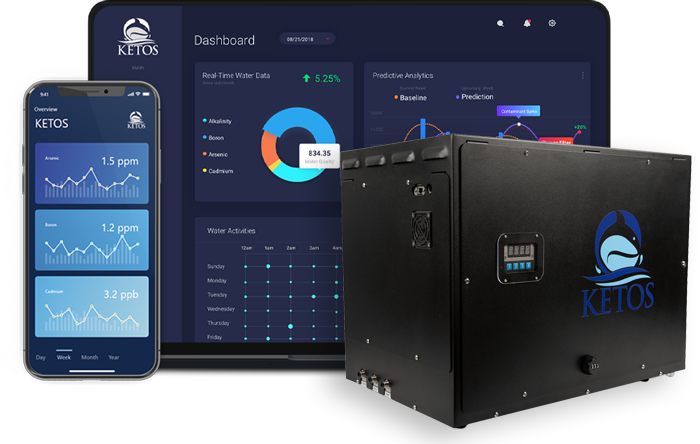
For schools, childcare facilities, and institutional buildings, the episodic nature of lead is the whole problem: a quarterly grab sample can land between episodes indefinitely. The Goddard School network deployed KETOS SHIELD autonomous monitoring across 9 locations for 140 days and collected 596,000 water quality measurements, with lead peaking at 0.228 ppb, a continuously documented record no schedule of individual samples could produce. That is the shape of the institutional answer: measure the water’s chemistry continuously, and lead episodes have nowhere to hide between test dates.
Concerned about contaminants in your water?
Get water testing from KETOS KELP using EPA-certified methodology, results you can trust, backed by real data.
Order a Water Test →Testing a Home for Lead
For a household, laboratory analysis of tap samples is the practical route, with technique mattering as much as the lab:
- Sample the cold tap. Warm and hot water carry more lead; drinking and cooking water should come from cold lines anyway.
- Capture a first draw. Collect after water has stood in the pipes several hours; this reflects the highest realistic exposure at that tap.
- Test the taps you actually drink from. Lead is a plumbing story, and each fixture is its own plumbing.
- Get numbers, not colors. The action level now sits at 10 ppb; only a lab report in ppb tells you where you stand against it. Boiling, for the record, does not reduce lead at all.
A home lab panel that reports lead alongside copper, arsenic, and general chemistry covers the plumbing-metals picture from one sample: KETOS KELP home water panels start at $199 with results in 5 to 7 business days.
Frequently Asked Questions
What is the acceptable level of lead in water?
There is no known safe level of lead exposure for children. The EPA’s regulatory action level for water systems, lowered by the October 2024 Lead and Copper Rule Improvements, is 10 ppb; a home reading approaching that number warrants action on the plumbing and a switch to bottled or treated water for drinking in the meantime.
How do I test my house for lead in the water?
Collect a first-draw sample from the cold tap you drink from after water has stood several hours, and send it to a laboratory that reports lead in parts per billion. Testing each drinking tap separately matters, because lead comes from the fixtures and lines behind a specific faucet rather than the supply as a whole.
How do schools and facilities test for lead?
Institutions increasingly pair periodic lab samples with continuous water quality monitoring, because lead release is episodic and grab samples can miss it. In one deployment, 9 school locations monitored with KETOS SHIELD for 140 days produced 596,000 measurements and a continuously documented lead record peaking at 0.228 ppb.
Does a water filter fix lead?
Filters certified under NSF/ANSI 53 for lead reduction can reduce it at the tap they serve, and the certification on the specific model is what counts. Testing first tells you whether you need one, and testing after tells you it is working.
Sources: EPA Lead and Copper Rule Improvements (October 2024); CDC guidance on lead in drinking water; Goddard School SHIELD deployment (KETOS customer case study). Checked August 20, 2026.