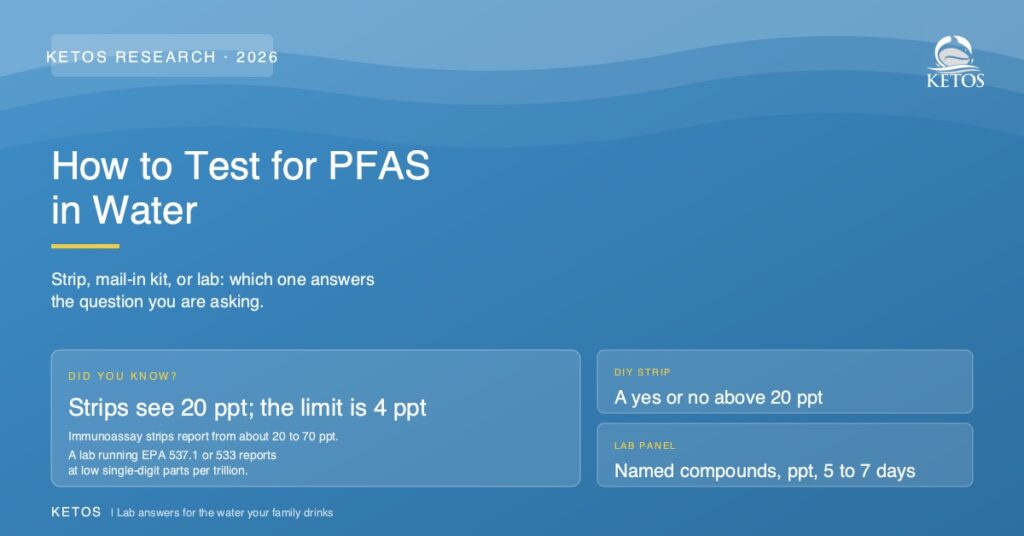




Home water test kits split into two products that share a name: DIY strips that screen a few parameters in minutes, and mail-in lab panels that measure dozens of contaminants at the concentrations federal limits are written in. Strips run $15 to $40; lab panels run $189 to $549 and answer the question strips can only gesture at. This guide compares both honestly, prices the whole job, and matches kits to situations.
Strips or Lab: Which Do You Need?
A strip tells you whether chlorine, hardness, or pH sit roughly high or low, which is genuinely useful for tuning a softener or checking an aquarium. The contaminants people worry about, lead in the parts-per-billion range and PFAS in parts-per-trillion, sit far below what color-change chemistry can see. A lab panel reports each contaminant as a number beside its federal benchmark. Our guide to choosing a water testing lab covers the five checks that separate lab providers.
The Kits, Compared
A note on where this guide comes from: KELP is our own lab-testing service. Specifications and prices below come from each provider’s published pages, checked on August 20, 2026, and recommendations are organized by situation rather than by brand.
General Home Panels
| Kit | Price | Panel | Turnaround |
|---|---|---|---|
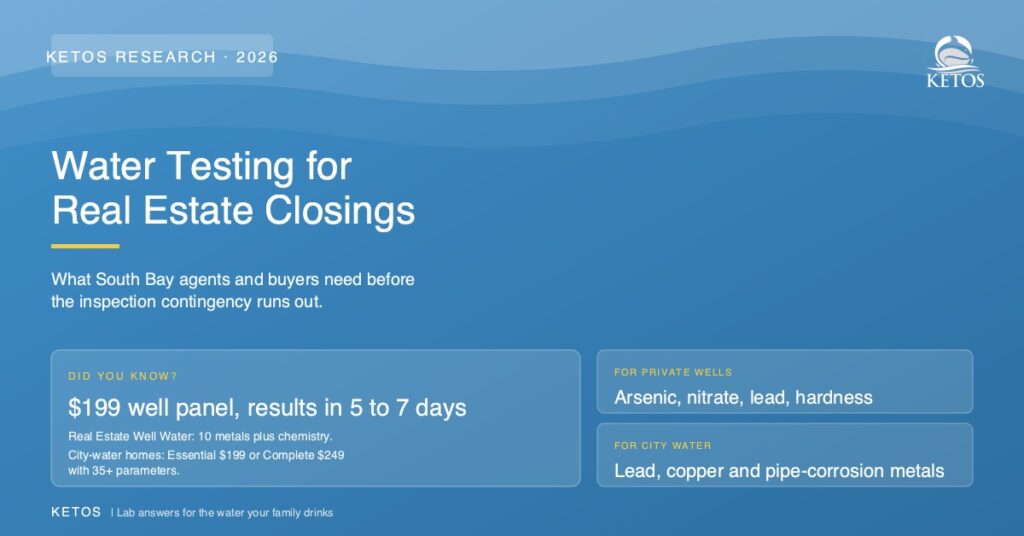
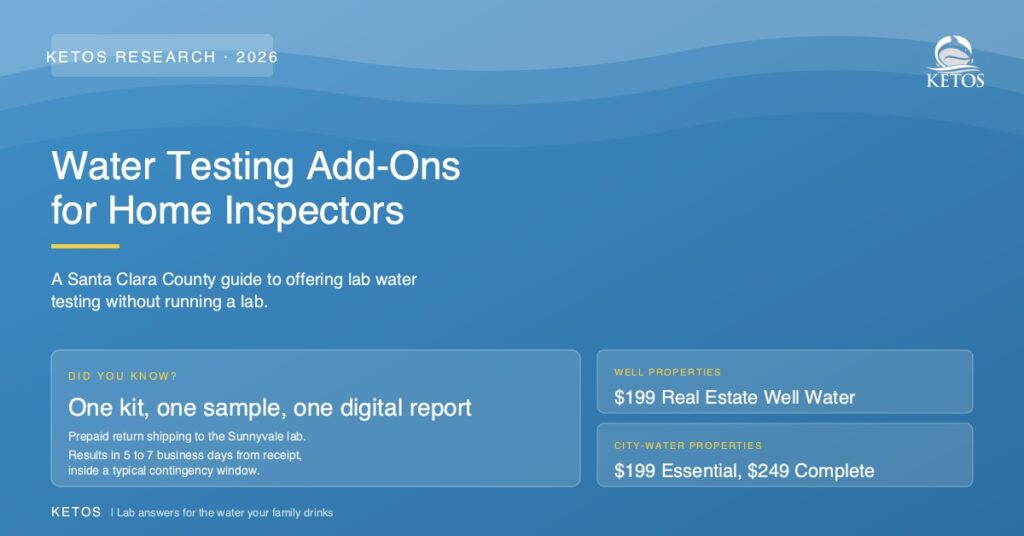
| KETOS KELP Essential Home | $199 | Heavy metals (lead, arsenic, copper and more), hardness and minerals | 5 to 7 business days |
| KETOS KELP Complete Homeowner | $249 | 35+ parameters: adds toxic metals (aluminum, cadmium, mercury) and inorganics (fluoride, nitrates, bromides, phosphates) | 5 to 7 business days |
| Tap Score Essential City Water Test | $189 | 49 analytes | About 5 business days at the lab |
| Tap Score Advanced City Water Test | $299 | 111 analytes including volatile organic compounds | About 5 business days at the lab |
| DIY test strips | $15 to $40 | Rough screening: chlorine, hardness, pH, a few more | Minutes; no lab report |
Home Panels That Include PFAS, One Sample
| Kit | Price | PFAS compounds | Also from the same sample | Turnaround |
|---|---|---|---|---|
| KETOS KELP Home Safety Screen | $549 | 18 | Heavy metals, hardness, TDS, sulfate, chloride, orthophosphates | 5 to 7 business days |
All KELP packages run EPA-certified methods with prepaid return shipping and a plain-English digital report.
Matching the Scope: What the Whole Job Costs
PFAS is again where the categories separate. Reaching PFAS coverage with a general-panel vendor means a second kit: Tap Score’s $189 Essential City test plus their $335 PFAS panel totals $524 across two kits and two sampling sessions, against $549 for KELP Home Safety from one sample in 5 to 7 days. Our PFAS kit comparison covers the PFAS-only options in depth.
Concerned about contaminants in your water?
Get water testing from KETOS KELP using EPA-certified methodology, results you can trust, backed by real data.
Order a Water Test →How to Choose a Home Water Test Kit
- Renting, and mainly worried about old pipes? A metals-focused panel answers lead and copper at the lowest lab price: KELP Essential Home at $199.
- Homeowner wanting the full chemistry picture? A 35+ parameter panel covers metals, inorganics, and water quality in one order: KELP Complete at $249, or Tap Score’s $189 Essential City if analyte count is your metric.
- Want PFAS answered in the same pass? The single-sample route is KELP Home Safety at $549; the two-kit route runs about $524 with two waits.
- Tuning a softener or filter, not investigating safety? Strips are fine for that job, and a periodic lab panel keeps the baseline honest.
Ready for numbers instead of color charts? Order a KETOS KELP home water test and get your report in 5 to 7 business days.
Frequently Asked Questions
How much does a home water test kit cost?
DIY strips cost $15 to $40 and screen a few parameters roughly. Mail-in laboratory panels cost $189 to $549 in 2026, measure dozens of contaminants at federal-limit resolution, and report in about 5 to 7 business days. Panels that include PFAS sit at the top of that range.
Are home water test strips accurate?
Strips are rough screens, not measurements. They can flag chlorine, hardness, and pH in useful ranges, and they cannot see lead at parts-per-billion or PFAS at parts-per-trillion, where the federal limits live. Decisions about safety call for a lab panel that reports numbers against benchmarks.
What should a home water test cover?
For city water, the realistic priorities are metals from plumbing (lead, copper), general chemistry (hardness, TDS, pH), inorganics such as nitrate and fluoride, and PFAS where regional risk warrants it. Check your area’s PFAS record to judge that last one.
Sources: provider specifications and prices from ketos.co and mytapscore.com, checked August 20, 2026; EPA National Primary Drinking Water Regulations for benchmark context.