



Once a year at minimum, per EPA guidance, with the clock resetting immediately after certain events. The annual baseline includes nitrates, total dissolved solids, and pH; households with small children, elderly adults, or someone pregnant should test more often; and flooding, land disturbance, well repairs, or any change in taste, odor, or color calls for a test now rather than at the next anniversary.
The Annual Baseline
The EPA’s guidance for private wells anchors the schedule: yearly testing that includes nitrates, total dissolved solids, and pH. The logic is that well contaminants arrive silently, from geology and land use, and an annual number is the only way to notice a trend before it becomes a problem. Metals such as arsenic and lead, and PFAS where regional risk warrants, extend the panel; our complete well testing guide maps each addition to its pathway.
Events That Reset the Clock
- Flooding or heavy runoff reaching the wellhead.
- Land disturbance nearby: construction, drilling, new agricultural operations.
- Well work: any repair, component replacement, or opening of the system.
- Sensory change: new taste, odor, or color, tested immediately rather than diagnosed by guesswork.
- A new baby who will be formula-fed: nitrate testing before the well’s water is relied on, for the reasons in our formula water guide.
Concerned about contaminants in your water?
Get water testing from KETOS KELP using EPA-certified methodology, results you can trust, backed by real data.
Order a Water Test →Making the Schedule Painless
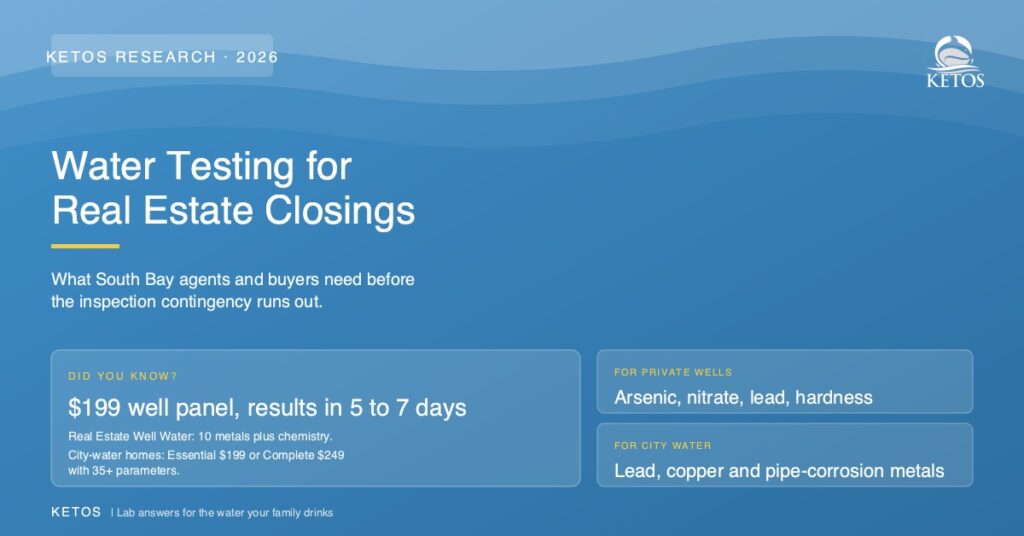
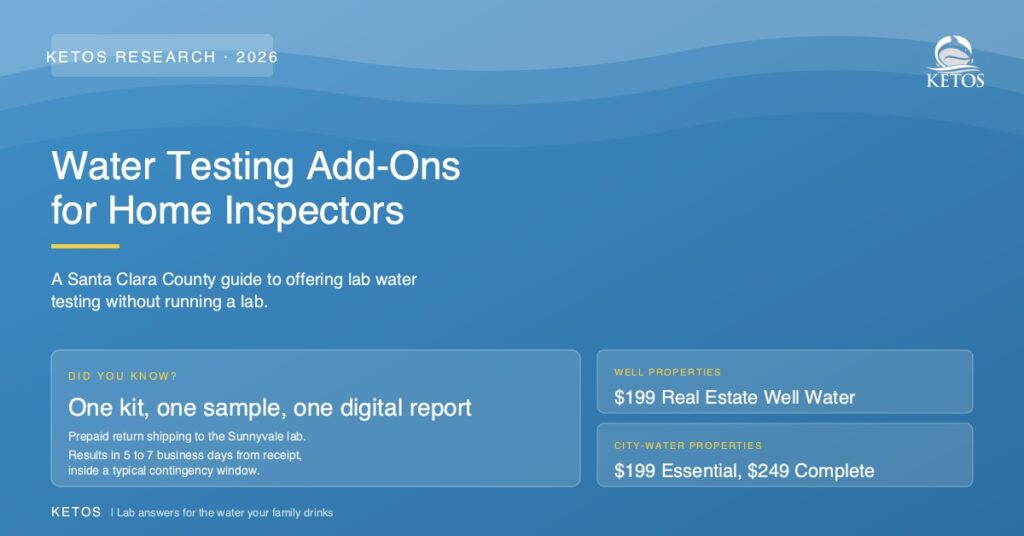
The owners who actually keep the schedule tie it to a fixed date and use mail-in panels: bottles arrive, samples go back with the prepaid label, and the report lands in about a week. Our well kit comparison covers the current options; an annual baseline panel runs $199 to $399.
Frequently Asked Questions
Is testing well water once a year enough?
Annual testing is the EPA’s baseline, and it is enough only between events. Flooding, nearby land disturbance, well repairs, sensory changes, or a formula-fed infant joining the household each call for testing right away regardless of when the last panel ran.
What time of year should I test my well?
Consistency beats season: the same month each year makes results comparable. Testing after your region’s wettest period adds value, since heavy rain and runoff are among the events most likely to move a well’s numbers.
How much does annual well testing cost?
A mail-in baseline panel covering chemistry, nitrates, and metals runs $199 to $399 in 2026. KETOS KELP’s well panels start at $199 with EPA-certified methods and a plain-English report in 5 to 7 business days.
Sources: EPA, “Protect Your Home’s Water” (private wells guidance), checked August 20, 2026.